








John Cheere (1709-1787)
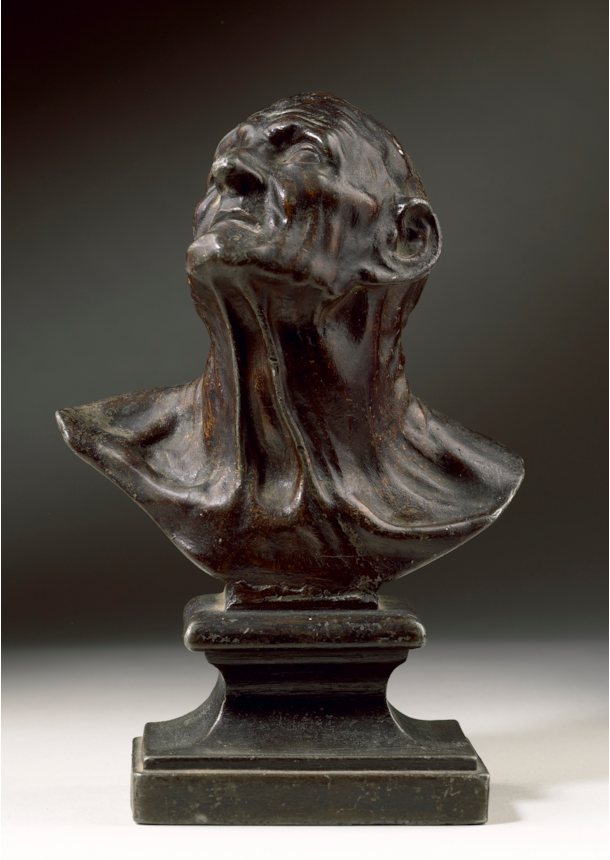
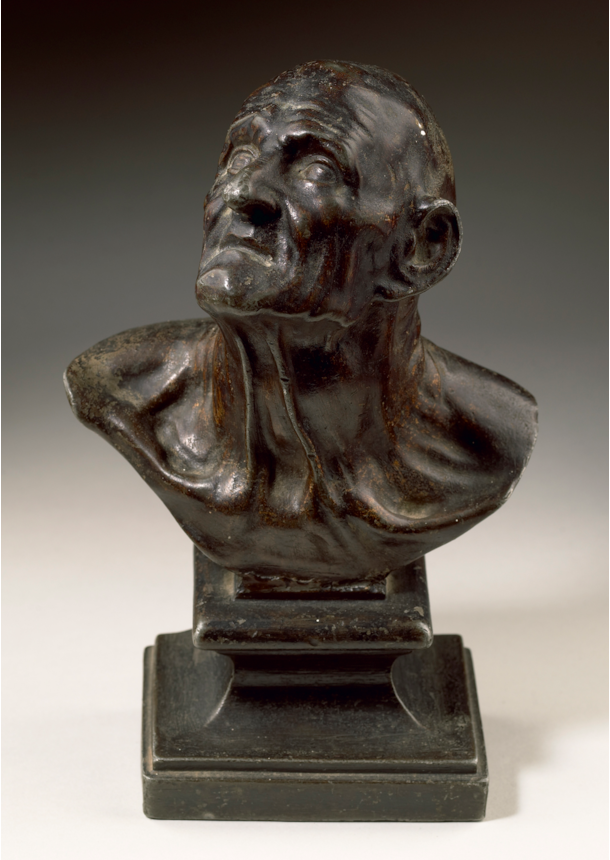
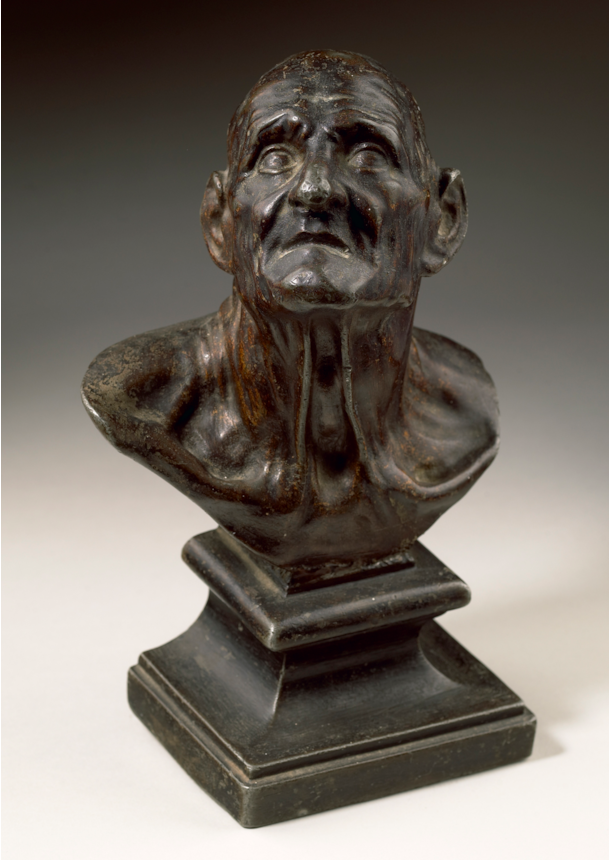
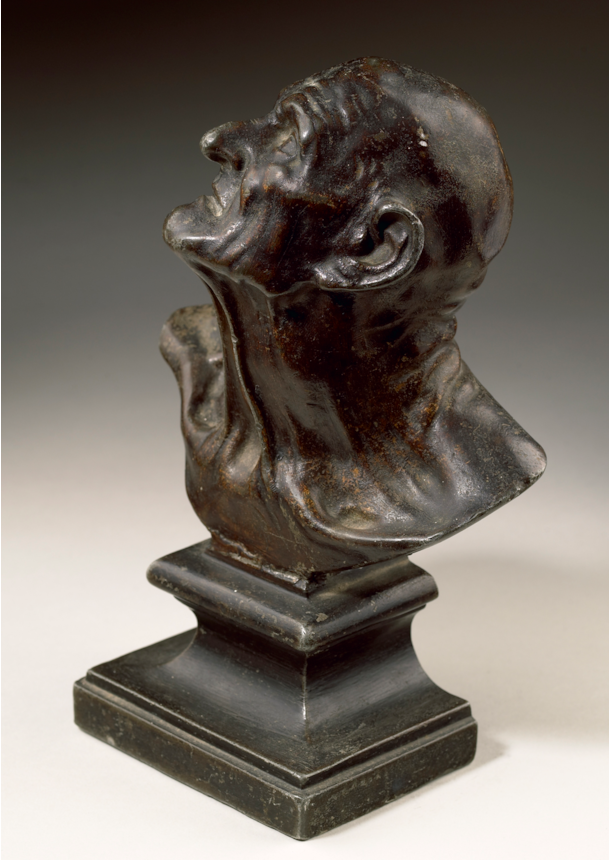
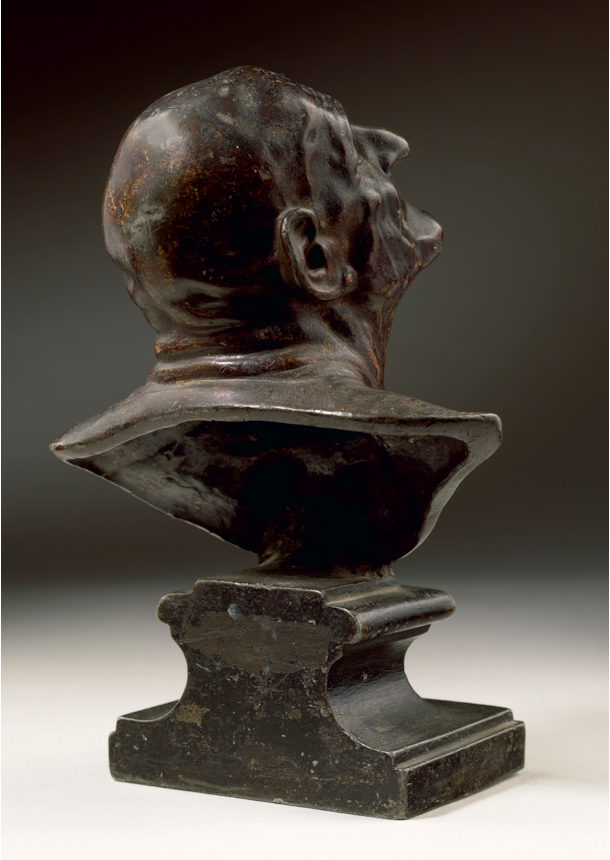
19. Head of Seneca
English, mid 18th century
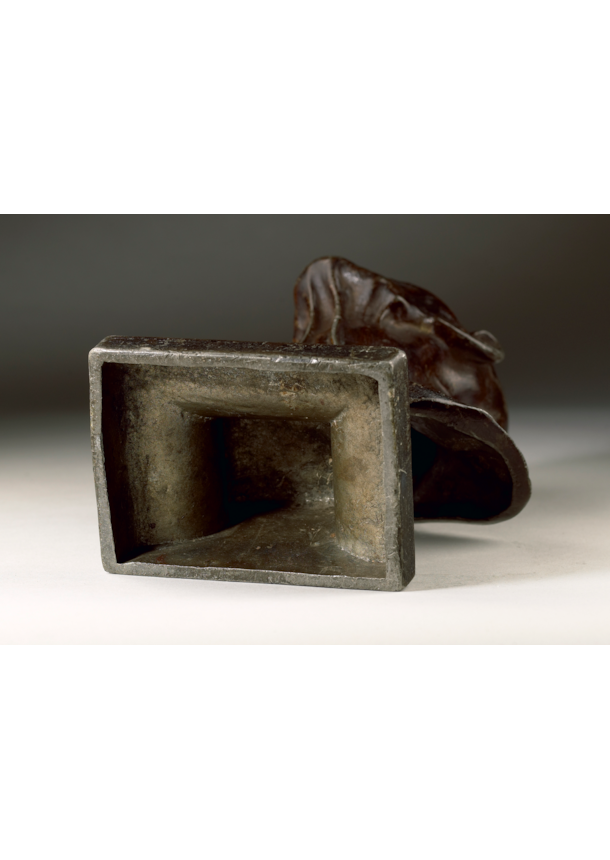
Bronzed lead
24 x 15.5 cm (9 ¹/₂ x 6 ¹/₈ inches)
£3,600
Baker, Malcolm. “Public Images for Private Spaces? The Place of Sculpture in the Georgian Domestic
Interior.” Journal of Design History 20, no. 4 (2007): 309–23. http://www.jstor.org/stable/25228551.
Grilo, Fernando. “John Cheere's Lead Garden Statues Workshop and the Important Commissions of Prince Pedro of Portugal in 1755–56.” Sculpture Journal, 2006. doi:10.3828/SJ.15.1.1.
Kurz, Otto. “A Sculpture by Guido Reni.” The Burlington Magazine for Connoisseurs 81, no. 474 (1942): 222–26. http://www.jstor.org/stable/868585.
The Garden History Blog. “John Cheere: The Man at Hyde Park Corner.” May 11, 2024. https://thegardenhistory.blog/2024/05/11/a-big-cheere-for-lead-statues/
Roscoe, Ingrid, Emma Hardy, & M. G. Sullivan. A Biographical Dictionary of Sculptors in Britain, 1660- 1851. Online edition, Henry Moore Foundation / Paul Mellon Centre. Accessed at https://gunnis.henry- moore.org/henrymoore/


The present work is a bronzed lead bust by John Cheere (1709-1787) after Guido Reni’s (1575-1642) bust of Dying Seneca. Lucius Annaeus Seneca the Younger, born c. 4 BCE in Corduba (now Córdoba Spain), was a prominent Roman philosopher, statesman, orator, and tragedian.
Guido Reni’s Renaissance model of Seneca has been subjected to ‘strange fluctuations of fortune,’ having long been misattributed as an authentic Roman portrait. As a result, casts of the bust continued to circulate within collections of reproductions after classical sculpture. The bronze cast was brought from Naples to Spain by King Carlos III, after being vaguely rumoured to have been excavated from either Pompeii or Herculaneum. The portrait was held in high esteem as both an authentic ancient portrait of the philosopher and as a masterpiece of realism in Roman art.
Sadly, the fame of the portrait ended abruptly in 1895, when J.R. Mélida published the damning results of his examination, declaring that the patina of the bronze was artificial, and that the work, in fact, was a product of the Renaissance. Mélida’s review left the portrait labelled a ‘fake,’ discrediting the high quality of the work causing it to fall into obscurity in comparison to its Pseudo-Seneca counterpart.
The question of authorship, however, remained unresolved, and in 1937, Lafuente Ferrari suggested that the work be attributed to the painter Francisco de Herrera the Elder (1589/1590-1656). Eager to determine who was the author of such an expressive face, Otto Kurz, soon after in 1942, drawing upon Carlo Cesare Malvasia’s earlier writings claimed that the bust in the Archaeological Museum in Madrid was the original and only preserved bronze copy of the head that had been modelled by the painter Guido Reni.
Despite the early misattribution of the bust as Roman, the work was held in high regard within contemporary artistic circles, particularly for its pedagogical value. Kurz attested to its quality through its inclusion in the ‘indispensable’ collection of casts and sculptures which were important models for pupils to copy from. Kurz notes several examples of the bust being used for artistic studies.
Inspired by the head of Laocoön, Kurz even goes as far as to say that it is not inconceivable Reni’s sculpture may be one of the earliest examples of an isolated head created solely to convey expression.3 Thus, although Reni’s Seneca was later discredited as a Renaissance work by Mélida, Kurz proves that the work’s artistic impact should not be overlooked.
It is therefore not improbable that John Cheere, the most prolific lead sculptor in Georgian Britain, was familiar with the work during his lifetime, before its later reclassification in 1895. While Henry Cheere, John’s brother, gained recognition as a major figure mid-18th century England alongside rivals like Michael Rysbrack and Louis François Roubiliac, John Cheere was largely forgotten until the 1974 exhibition catalogue "The Man at Hyde Park Corner." His work was previously dismissed as mere mass production often bought by the ‘nouveaux-riche’; however reassessment reveals remarkable artistry in his lead statues, which were cast from moulds and then meticulously hand finished.
After 1737, John Cheere established a monopoly in lead statuary production and became the largest producer of plaster statuary in Britain. His workshop employed a considerable workforce and occasionally subcontracted work, including lead busts based on originals by Louis-François Roubiliac. Now most famous for his larger garden statues, inclusive of the lead equestrian statue of William III for St James’s Square, Cheere also created domestic works. As Malcolm Baker explains in his article ‘Public Images for Private Spaces...’ there was an increasing demand amongst Georgian collectors for what had previously been considered ‘public art,’ such as statues, to be brought into the private interior.
Baker notes that by mid-eighteenth century, Cheere had shifted orientation to comply with demand for less familiar, classically inspired sculptures to decorate façades and parade rooms, producing statuettes of ancient writers and thinkers; a category into which this cast of Seneca would have fallen, as many of Cheere’s works were derivative of earlier sculptors. Some of these were lead casts taken from unfamiliar antique statues and busts, amongst which may have been casts of Guido Reni’s Seneca given its temporary inclusion among the antiques. Cheere’s statuette size made it ideal for private handling and the enjoyment of the discerning virtuoso.
We know for definite that a slightly larger plaster sculpture of Pseudo-Seneca, dated 1754, is currently at Temple Newsam House, confirming that Cheere was producing busts of this subject. The Pseudo- Seneca, a Roman bronze whose emaciated features, long thought to reflect Seneca’s Stoic philosophy, significantly influenced later depictions of the philosopher, including works by Rubens. However, modern scholarship has since rejected the identification, suggesting instead that the bust is most likely a fictitious portrait, possibly representing Hesiod or Aristophanes.
Both Guido Reni and John Cheere, through historical misattribution, have not consistently received the recognition their works merit. This object, therefore, represents an overlooked gem, truly unique and rich in its interconnected history between these two artists.