







Giuseppe Piamontini (1664 - 1742)
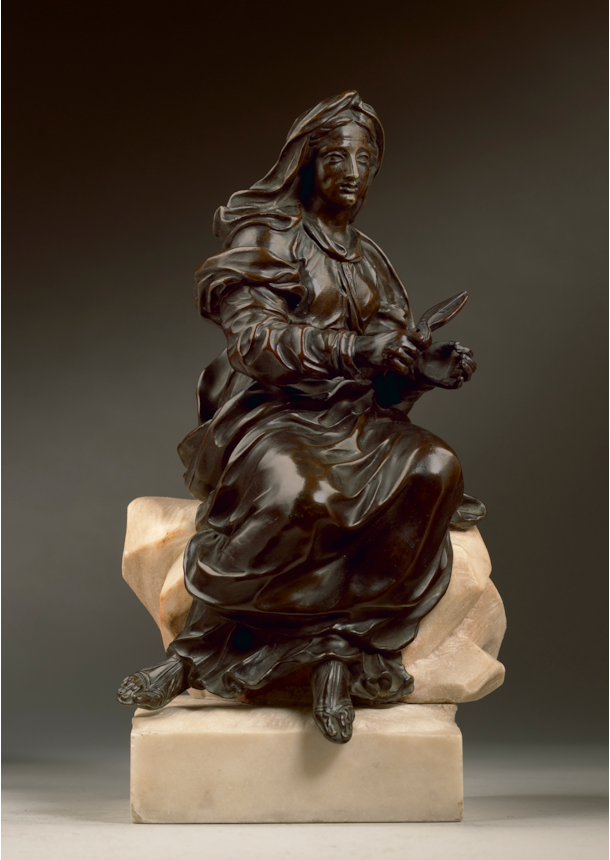
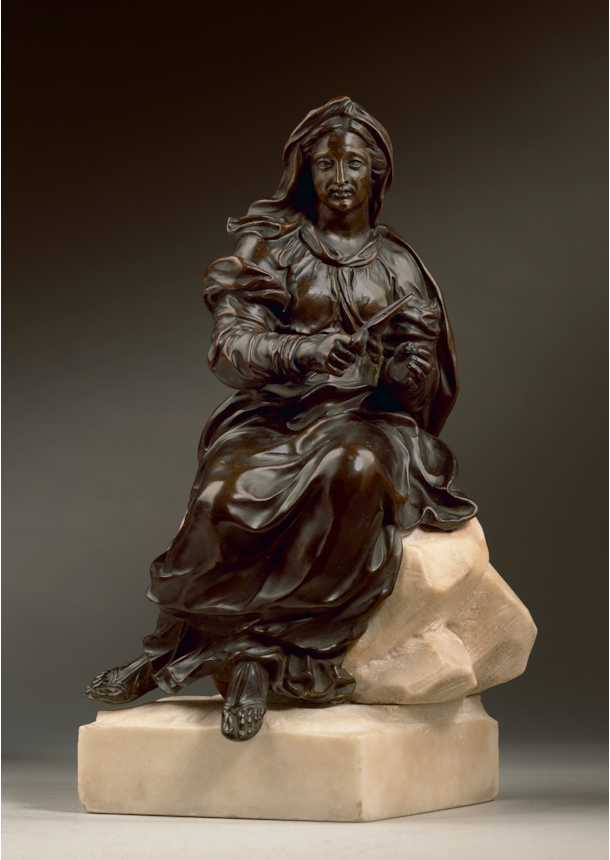
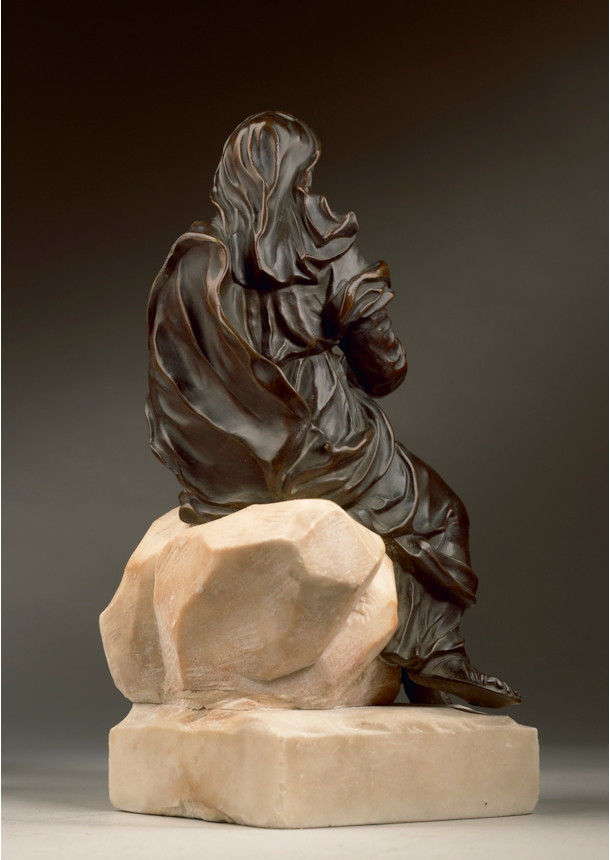
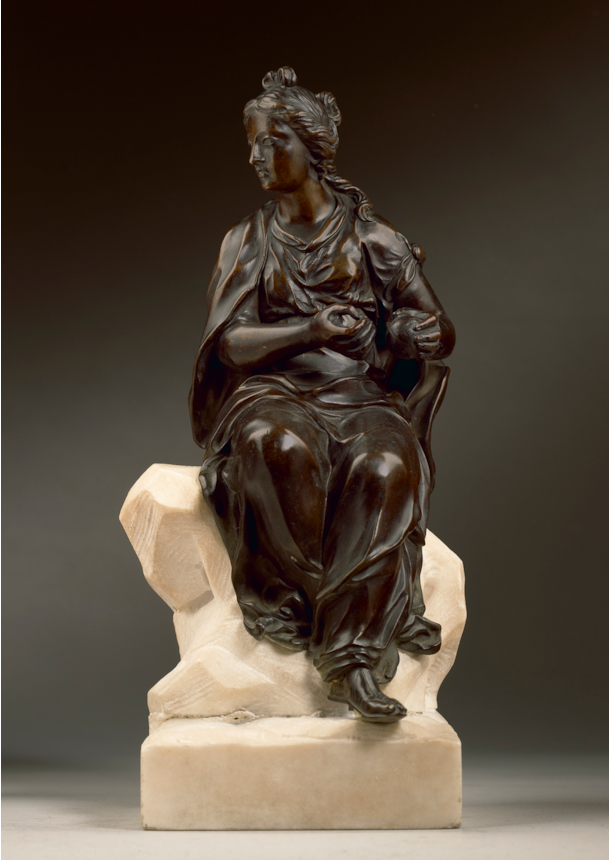
3. The Three Fates (Parcae in Latin)
Bronze, on white marble pedestals
Florence, second quarter of the 18th century
31.5 cm (12 ½ in.) high; 29 cm (11 ½ in.) high; 32 cm (12 ½ in.) high


S. F. Rosen (ed.), The Twilight of the Medici: Late Baroque Art in Florence, 1670-1743 (exh. cat. Detroit Institute of Arts), Detroit, 1974
K. Lankheit, Die Modellsammlung der Porzellamanufaktur Doccia, Munich, 1982
G. Pratesi (ed.), Repertorio della Scultura Fiorentina del Seicento e Settecento, Turin, 1993, 3 vols.
K. Barzman, The Florentine Academy and the Early Modern State. The discipline of Disegno, Cambridge, 2000
S. Casciu (ed.), La Principessa Saggia, L’Eredita di Anna Maria Luisa de’ Medici, elettrice Palatina, exh. cat., Livorno, 2006
E. Schmidt (ed.), Plasmato dal Fuoco: La scultura in bronzo nella Firenze degli ultimi Medici, exh. cat, Florence, 2019-20
Born in Florence, Giuseppe Piamontini was apprenticed to Giambattista Foggini (1652-1725), founder of the school of Florentine late Baroque sculpture that flourished under the last members of the Medici dynasty of Grand Dukes. Considered a child prodigy, he received his first commission aged fourteen – a group in marble for Prince Ferdinando de’ Medici – and was then sent to study between 1681 and 1686 under Ercole Ferrata (1610-1686) at the short-lived, but effective, art academy founded by Cosimo III de’ Medici in Rome. When Piamontini returned to Florence, Cosimo granted him a studio and a salary, and commissioned from him a Dead Christ in alabaster (Palazzo Pitti) as well as a life-size marble statue of Saint John the Baptist for the city’s Baptistry (1688, now in the Museo dell’Opera di Santa Maria del Fiore, Florence). The Medici heir apparent, Gran Principe Ferdinando, also took an interest in him, perhaps partly because they were almost the same age, and collected “many bronzes” by his hand, as recorded by Piamontini’s biographer Gaburri.
Highly skilled at carving marble as well as modelling for bronze statuettes, Piamontini’s legacy can be admired today across churches and museums worldwide. Among his work in marble, his allegorical figures flanking the sarcophagus in the Feroni Chapel in the Florentine church of Santissima Annunziata are particularly admired, while among his bronzetti the pendant statuettes of Jupiter riding an Eagle and Juno with a Peacock at the Ashmolean Museum in Oxford, and a depiction of St. Louis of France with the crown of the thorns, commissioned by the Electress Palatine for her apartments in Palazzo Pitti in about 1722, in Florence’s Museo del Bargello, stand out as examples of his mastery.
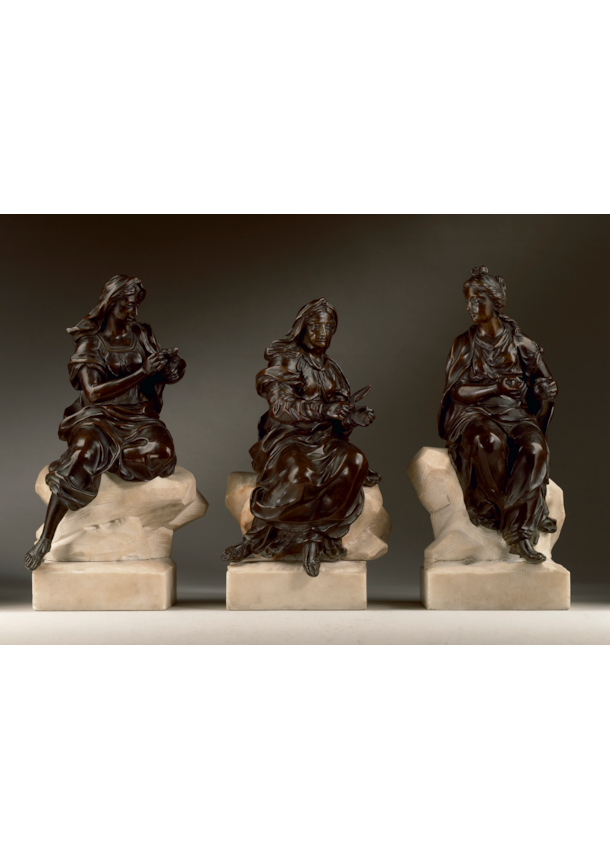
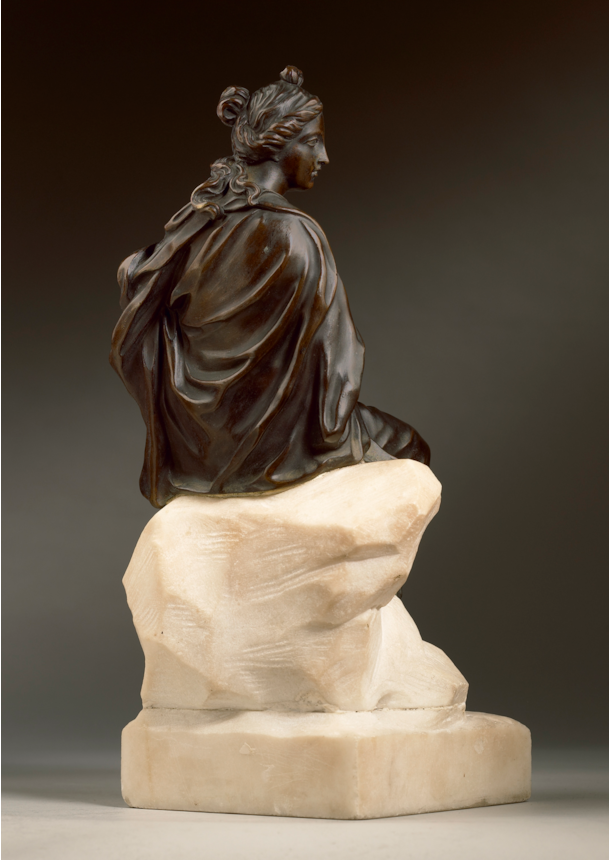
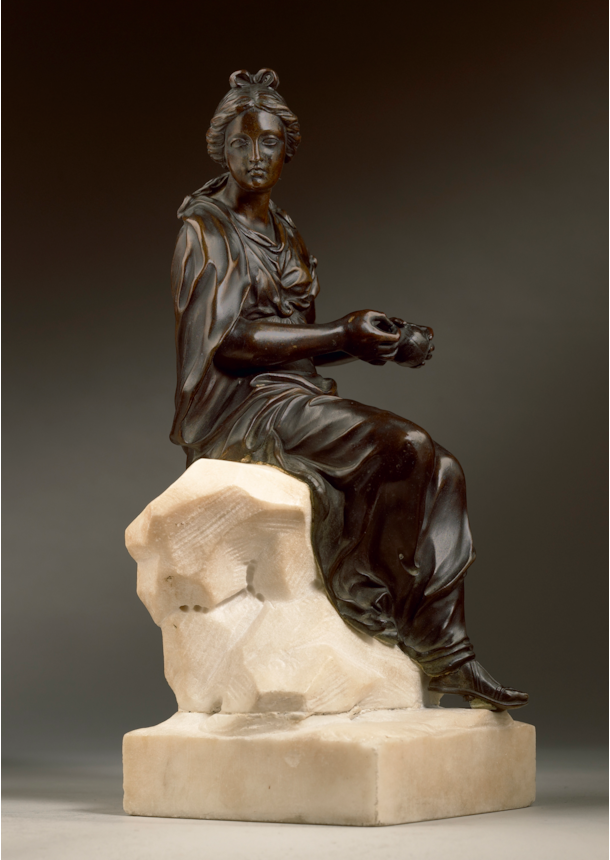
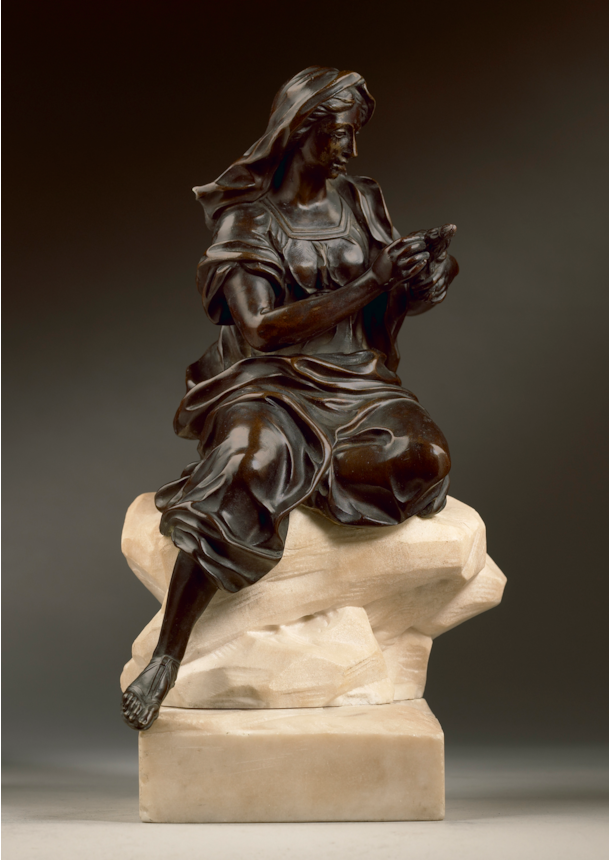
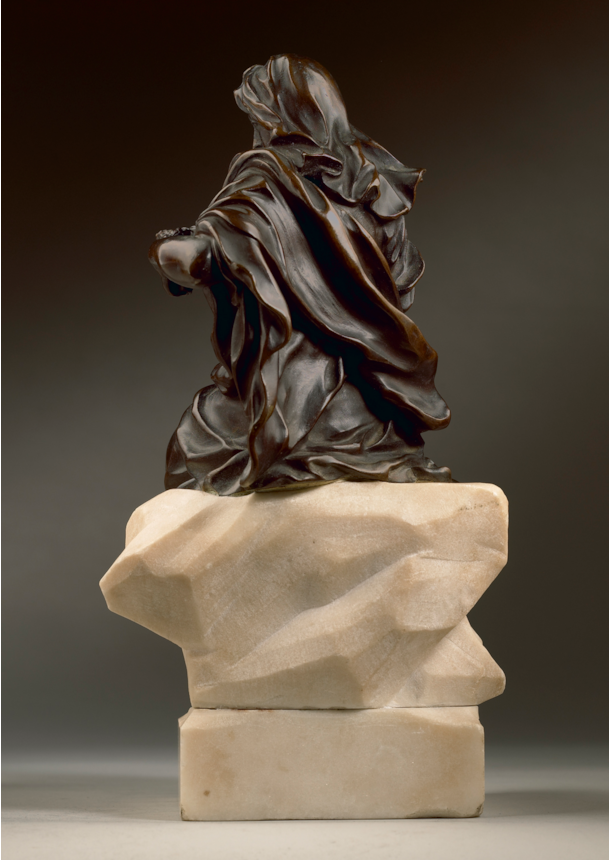
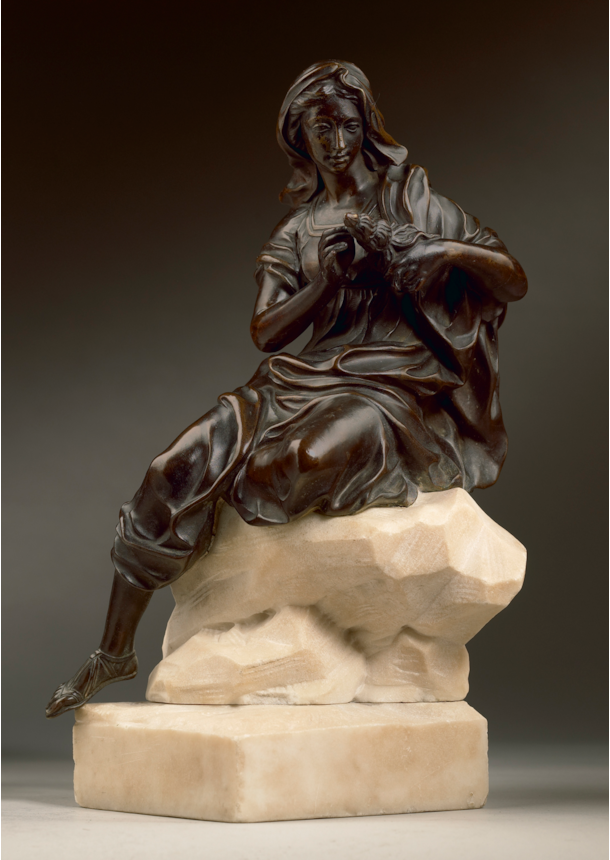
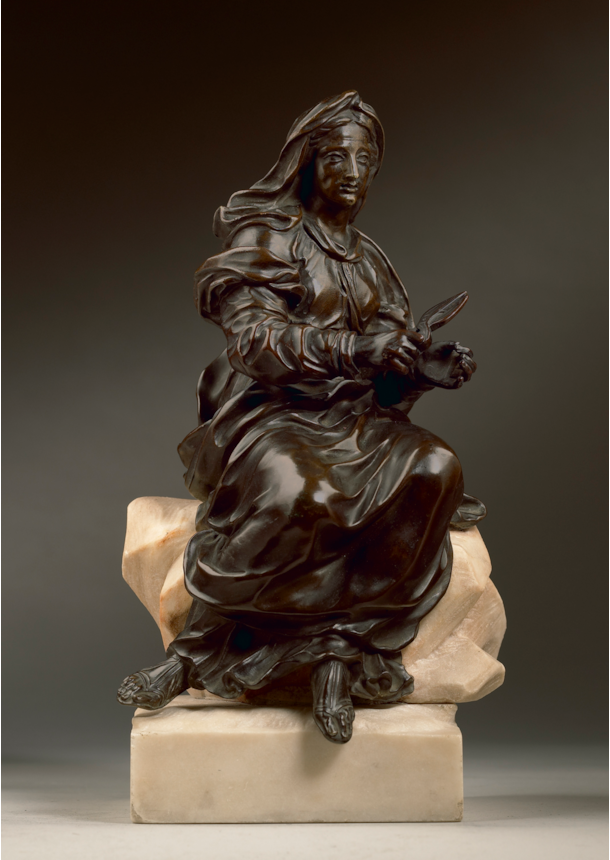
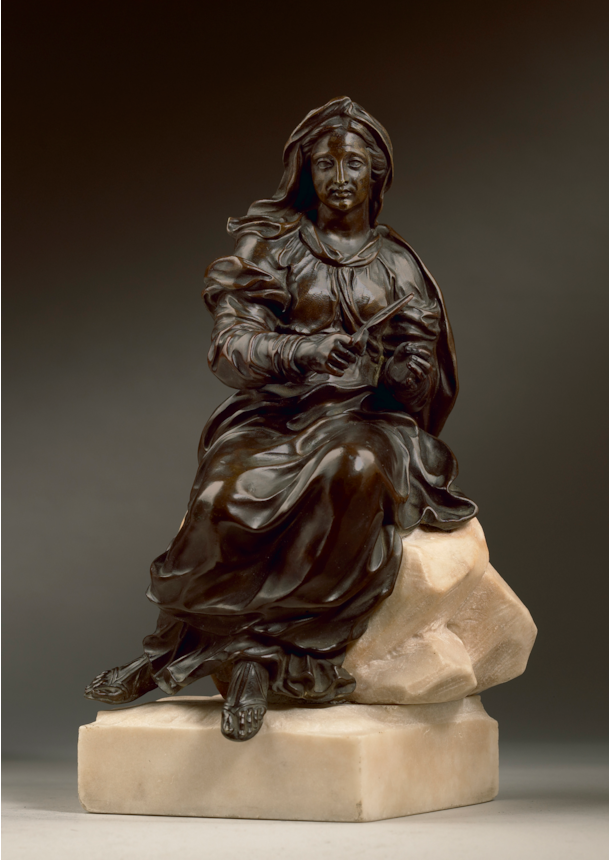
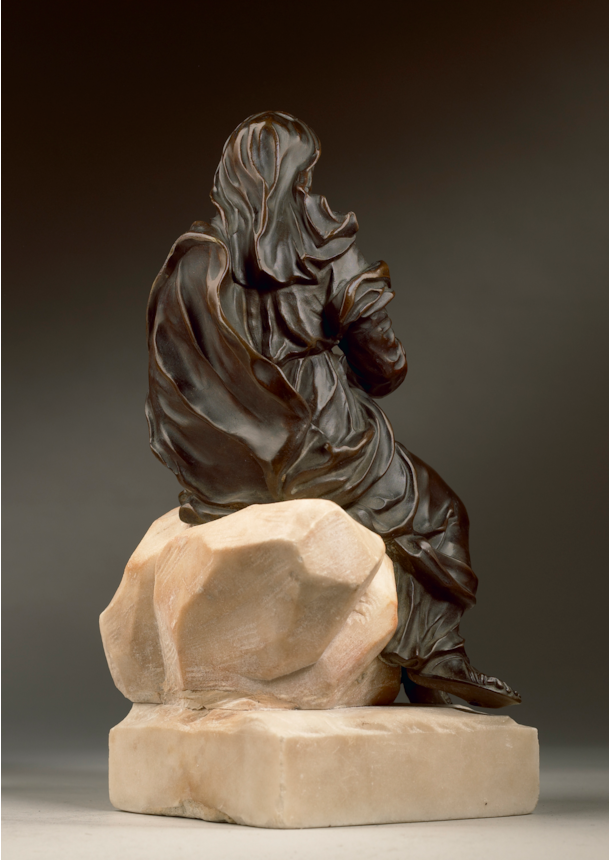
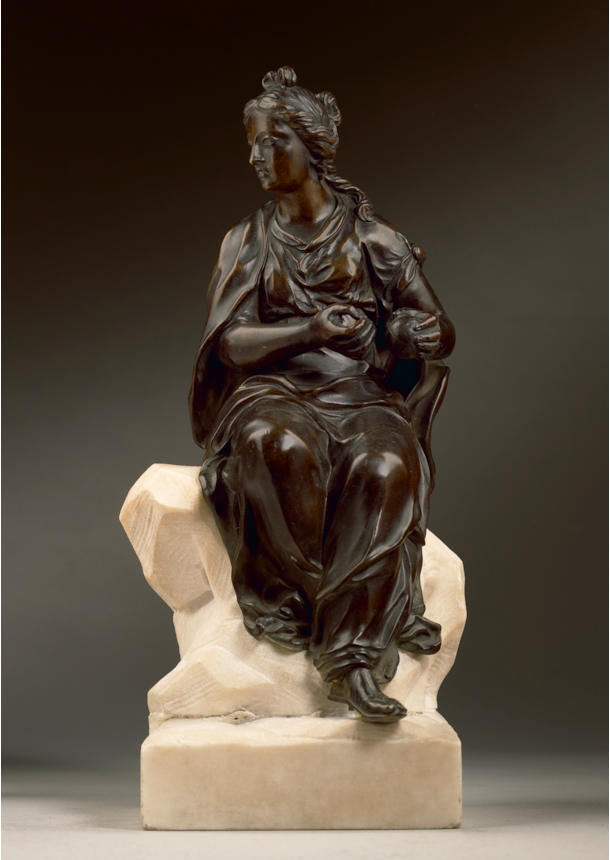
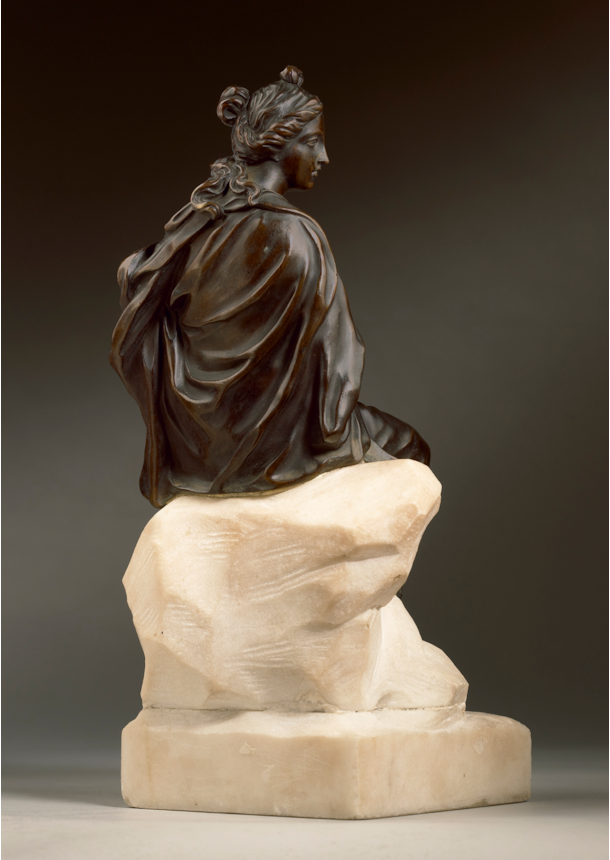
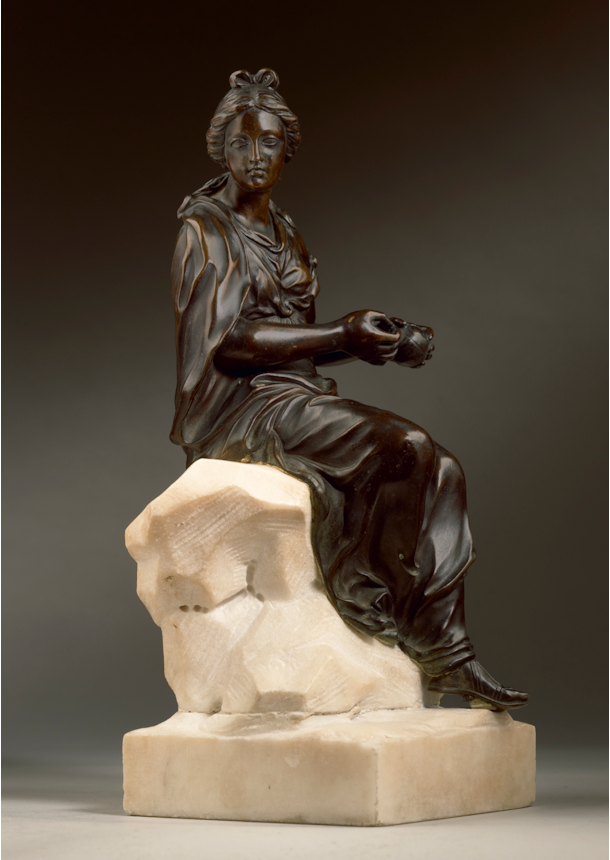
Recently rediscovered, the present group of three bronzetti representing the Fates – personifications of destiny in ancient Graeco-Roman mythology – display compelling stylistic similarities with Piamontini’s style. First of all, the theme, which is unusual, would have been familiar to the artist thanks to a rendition of the subject by his teacher Foggini, known today through versions by the Doccia porcelain manufactory. Foggini’s son Vincenzo was paid in May 1750 for those figures being cast in wax out of plaster moulds, though no castings have emerged in the more expensive bronze.
Known individually as Clotho, Lachesis, and Atropos, the Fates were – according to Hesiod – daughters of Nox and Erebus, or of Zeus and Themis . Their role was to ensure that every being, both mortal and divine, lived out their destiny as it was assigned to them by the laws of the universe. For mortals, this destiny spanned their entire lives, and it was represented as a thread spun out from a spindle. Whilst in some representations, Zeus was seen to have command over them, for the most part, they were considered in their role as enforcers of fate, to be above even the gods. Clotho, the ‘spinner’ was the youngest of the fates, presiding over the moment of birth, and is often presented spinning the thread of life from a distaff onto her spindle. Lachesis measured the length of thread of life allotted to an individual and spun out all the events and actions of their life. Atropos, the ‘inexorable’, was the eldest of the three: having chosen the manner of one’s death, she was responsible for cutting the thread of life, and is consequently represented with shears.
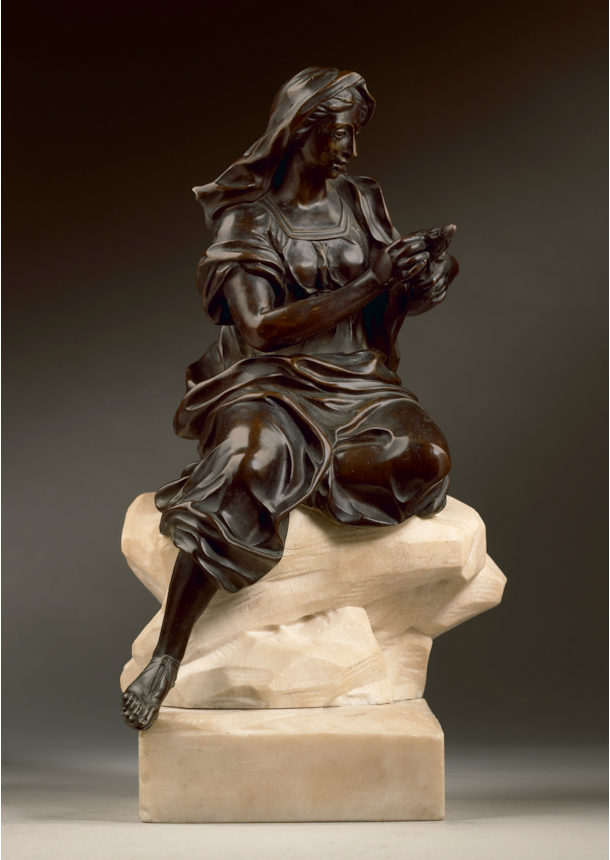
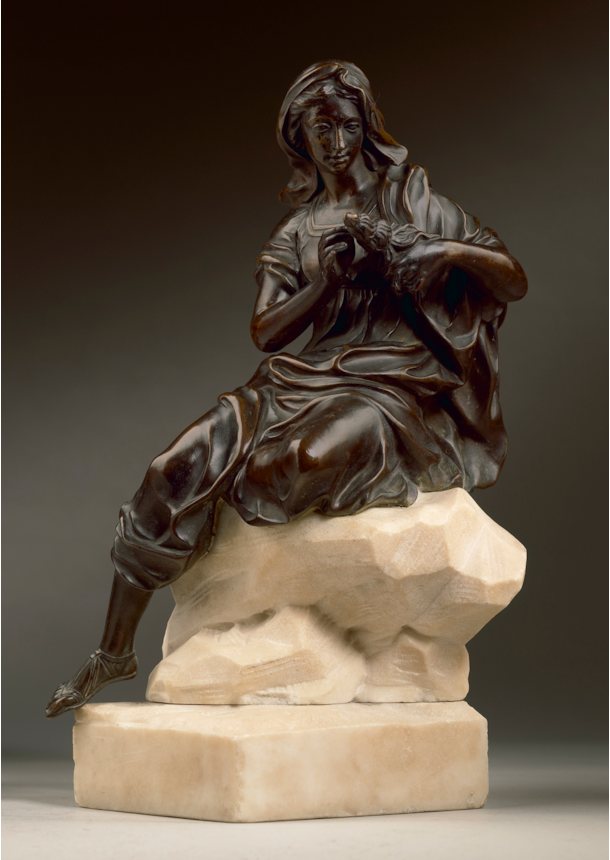
In this instance, the powerful Fates are depicted by Piamontini as adult women of slightly differing ages, but not as old women with wizened faces, as was standard. They sit in centrifugal poses, two with their arms akimbo and Clotho brandishing her distaff, penetrating the space around them, so that they seem to interact excitedly, discussing the fate of a poor mortal. In Piamontini’s composition, the figures are demure and pleasantly dressed, in tune with the fashionable taste of ladies in the 18th century. They also look more like the calm, classical statues that had begun to come back into vogue as the forerunners of Neo-Classicism, which at the end of the century was to displace the last vestiges of the Baroque in Italy, triumphing in the emergence of Canova and Thorvaldsen in Rome.
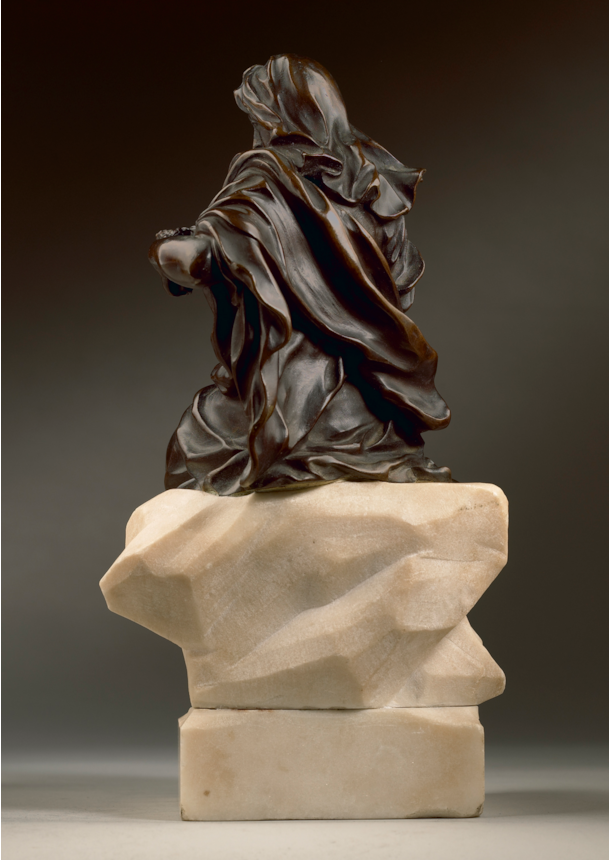
Noteworthy comparisons may indeed be remarked between these seated Fates and Piamontini’s female figures. Details such as the configuration of the faces, with highly arched brows and large eyes, and elements such as the swirling draperies and the turning poses of the figures, all find parallels in bronzes by Piamontini, including the aforementioned Juno, the nymph Syrinx in the group Pan and Syrinx first attributed to the sculptor by Jennifer Montagu, the figure of Diana from a bronzetto of the huntress that was in Palazzo Pitti until 1799, and Ariadne from a group of Bacchus and Ariadne now in the Getty Museum.
It is to be hoped that the attribution for these Three Fates – with their rare subject-matter – will eventually find corroboration in the ample documentation that is now coming out for nearly all the later Florentine Baroque sculptors of Foggini’s and Piamontini’s generations.