







Ferdinando Tacca (1619-1686) (Attributed to)
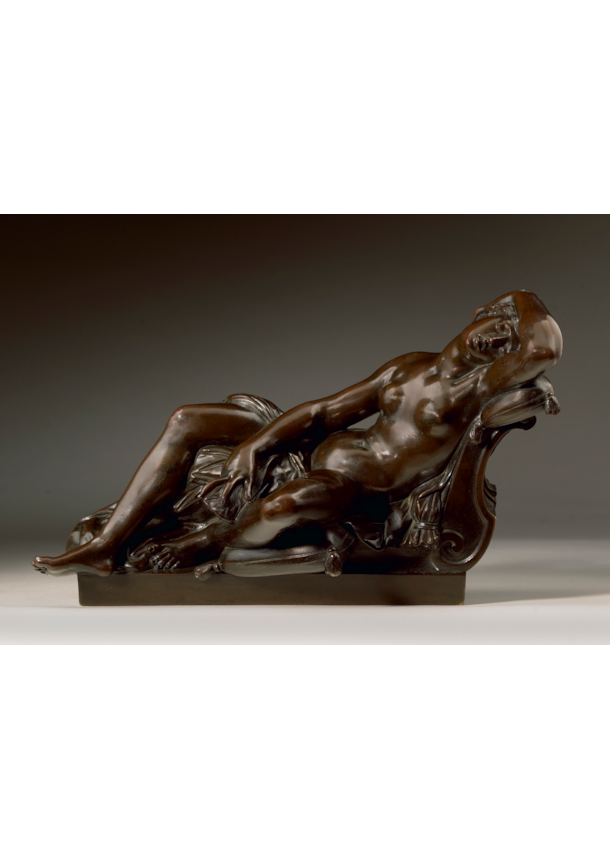
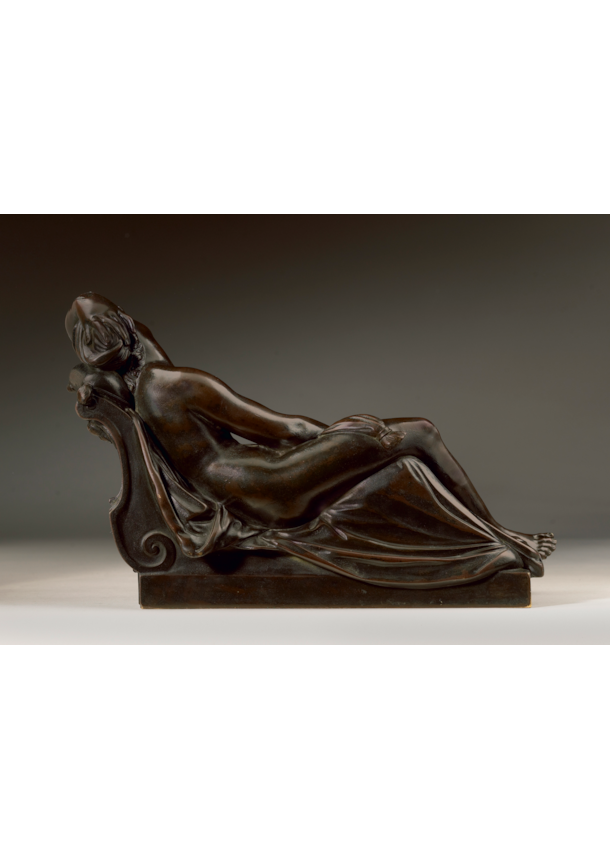
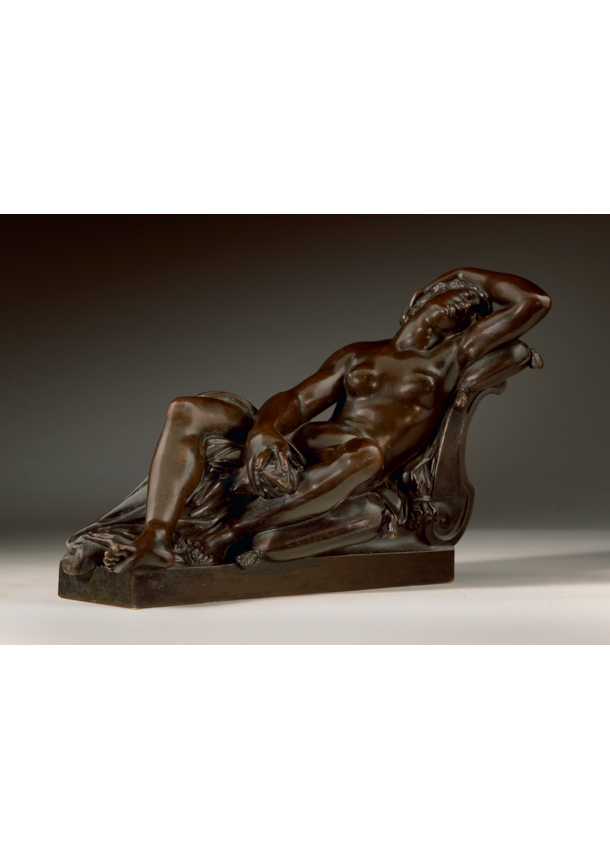
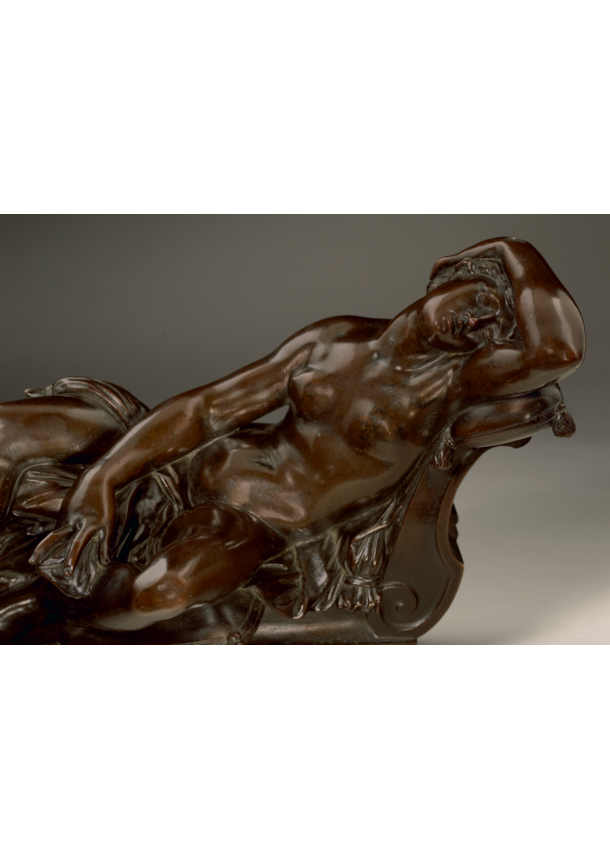
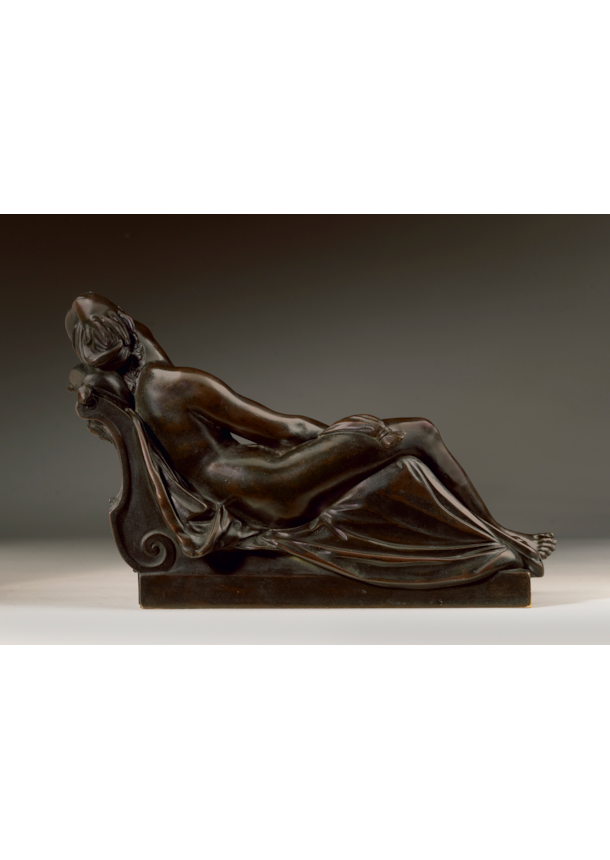
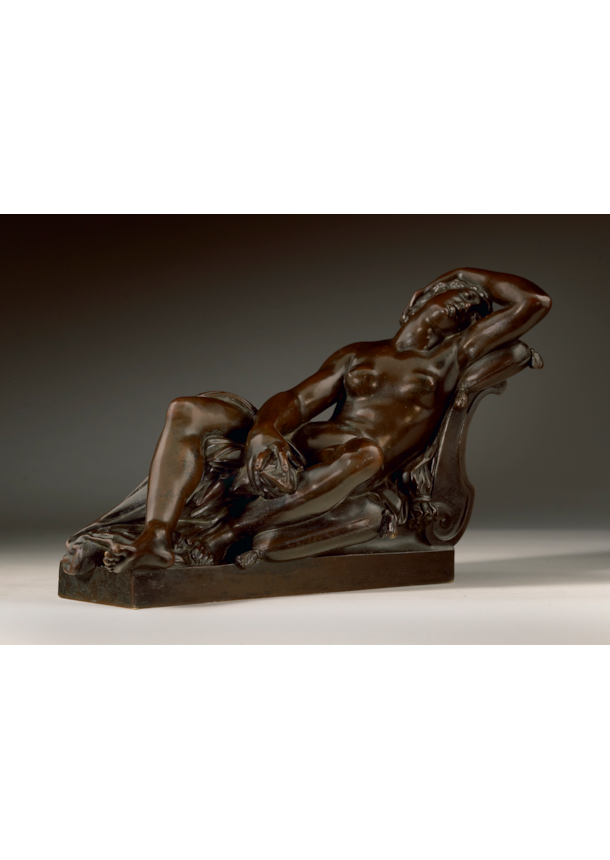
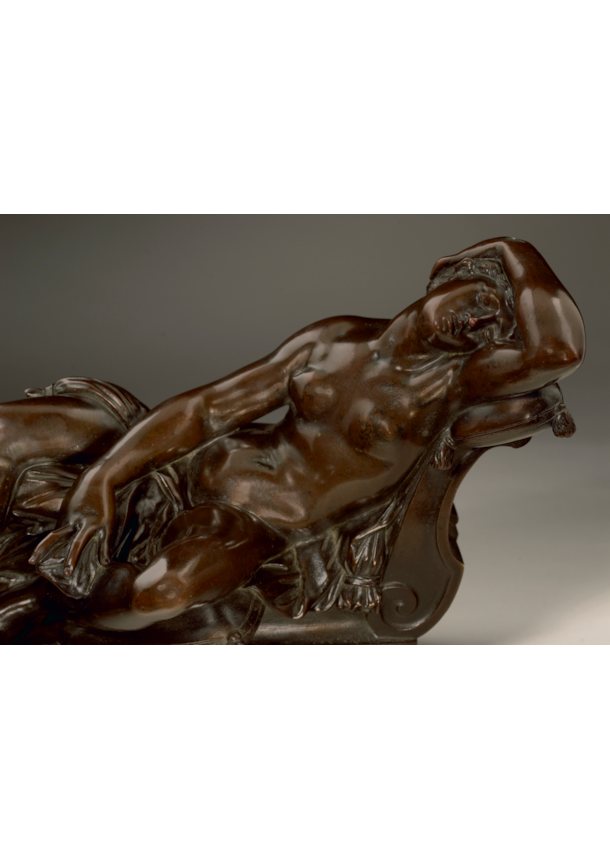
8. Sleeping Nymph
Bronze
Florence, c.1640-1650
32 cm (12 ½ in.) long x 20.5 cm (8 in.) wide


C. Avery, Giambologna: The Complete Sculpture , 1987, pp. 118-121
F. Haskell & N. Penny, Taste and the Antique , vol I, 2024, pp. 245-252
Ferdinando Tacca (1619-1686) was one of the most important sculptors working in Florence during the middle decades of the seventeenth century. The son of Pietro Tacca, Giambologna’s principal assistant and eventual successor, Ferdinando inherited not only his father’s workshop but also a direct connection to one of the defining traditions of Florentine bronze sculpture. When Pietro died in 1640, Ferdinando succeeded him as court sculptor to the Medici and took over the family’s celebrated workshops and foundry in the Borgo Pinti. Here, surrounded by Giambologna’s models and working within the traditions established by his father, he continued to produce small-scale bronzes for the Medici court and for discerning collectors throughout Europe.
Ferdinando’s familiarity with Giambologna’s work was therefore unusually intimate. Having inherited many of the master’s models through his father, he was able to revisit and reinterpret compositions that had already acquired considerable prestige amongst European collectors. His bronzes are distinguished by their refined modelling and exceptionally sensitive treatment of surface, in which considerable attention is paid to the differentiation of materials. This is particularly evident in the present Sleeping Nymph, where the smooth, highly finished surface of the flesh contrasts with the more heavily worked drapery and the deeply punched rocky support. Such contrasts demonstrate Tacca’s ability to exploit the medium of bronze to suggest the tactile qualities of skin, cloth and stone.
The origin of Giambologna’s composition is itself rooted in the Renaissance fascination with ancient sculpture. Its most immediate classical precedent is the Roman marble figure called ‘Cleopatra’ or ‘Sleeping Ariadne’, currently housed in the Vatican. This monumental ancient figure depicts a draped female figure reclining in sleep, her head supported by her raised arm in a languorous repose. Giambologna reduced the monumental marble to the scale of an intimate bronze, stripping the figure of her drapery and extraneous attributes, creating a sensuous nude whose elongated limbs and twisting body epitomise the sculptor’s style.
The earliest known reference to the model occurs in 1584, when Grand Duke Francesco I de’ Medici sent his brother, Cardinal Ferdinando de’ Medici, a bronze described simply as a “nuda in atto di dormire”, a nude woman in the act of sleeping. The simplicity of this description is revealing, since the precise identification of the figure appears to have been of secondary importance to her sensual beauty and elegant pose. The composition was subsequently identified variously as Venus or a nymph, although by the early seventeenth century the latter identification had become established.
A prime variant of the model by Giambologna can be found in the Staatliche Kunstsammlungen, Dresden (inv. no. IX 34). Another variant of the model, known as ‘Bireno and Olimpia’ is housed in The Art Institute, Chicago (inv. no. 1993.348). An additional comparand can be seen in The Victoria and Albert Museum, London (inv. no. A.75-1956).