



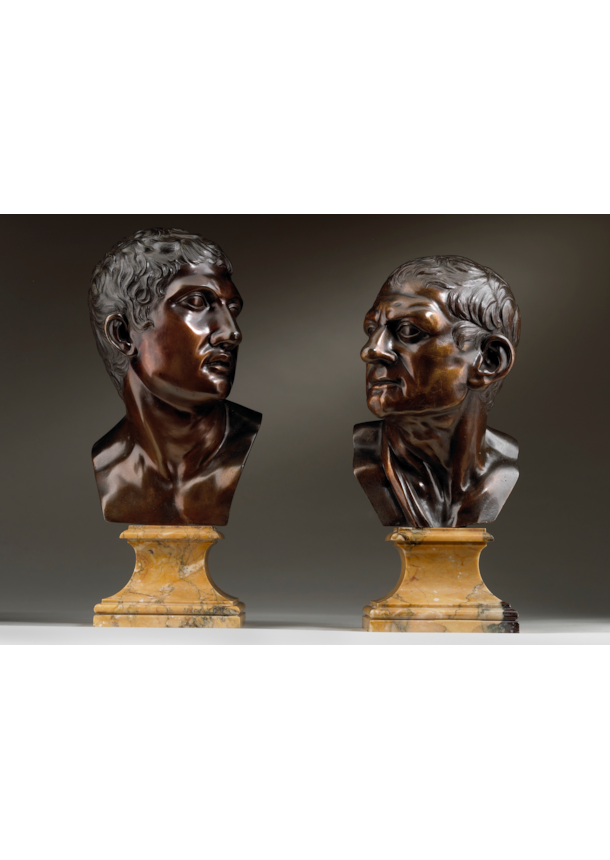
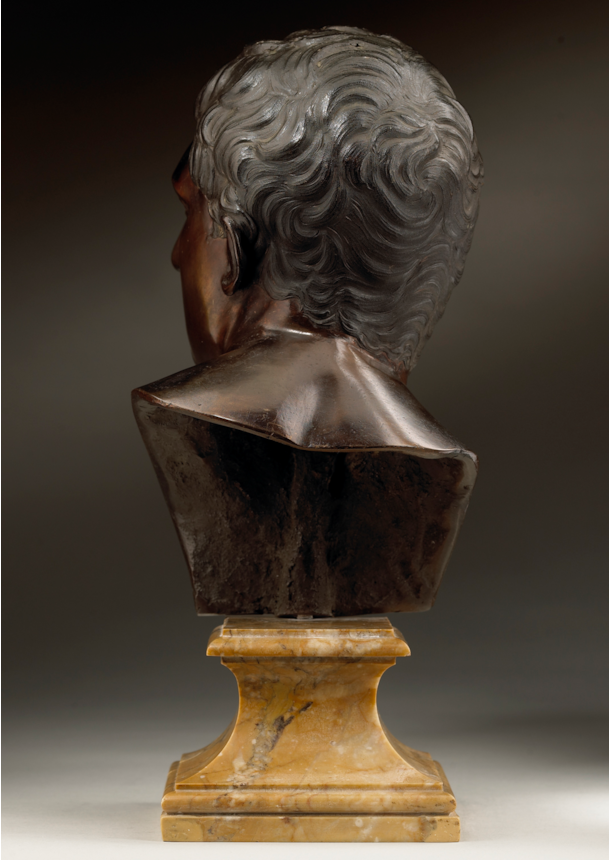
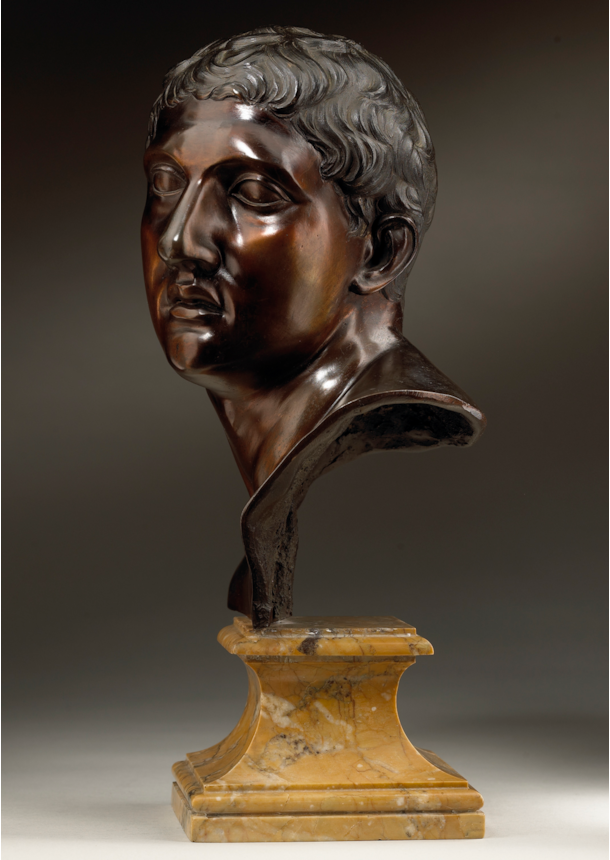
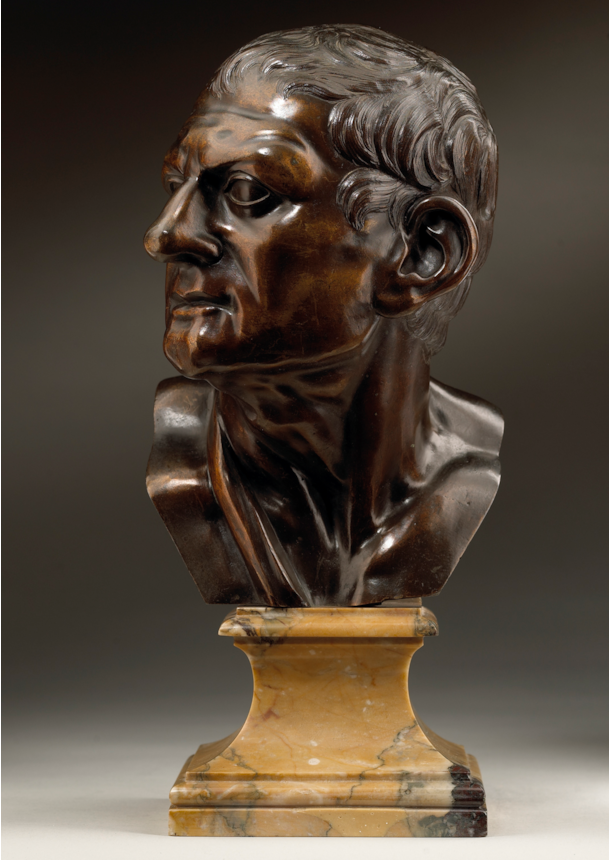
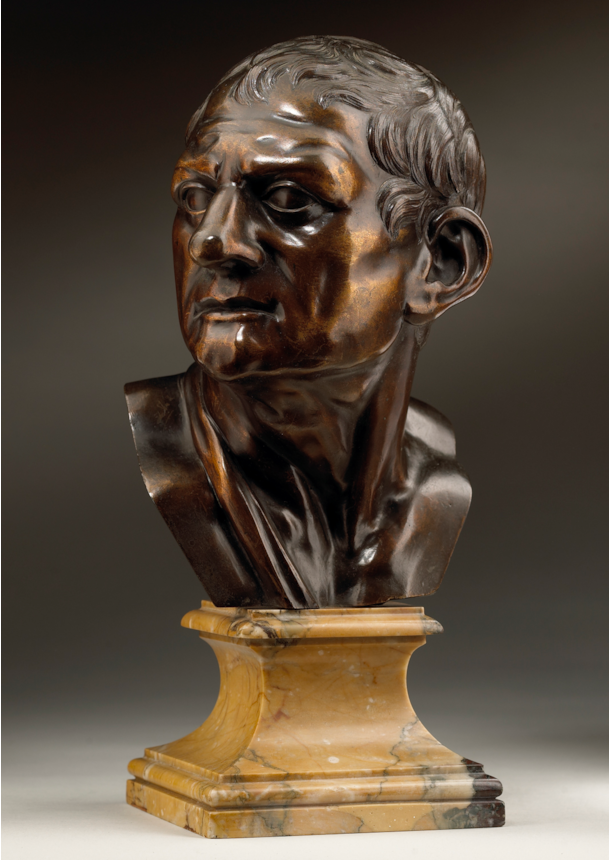





Florentine, early 18th century
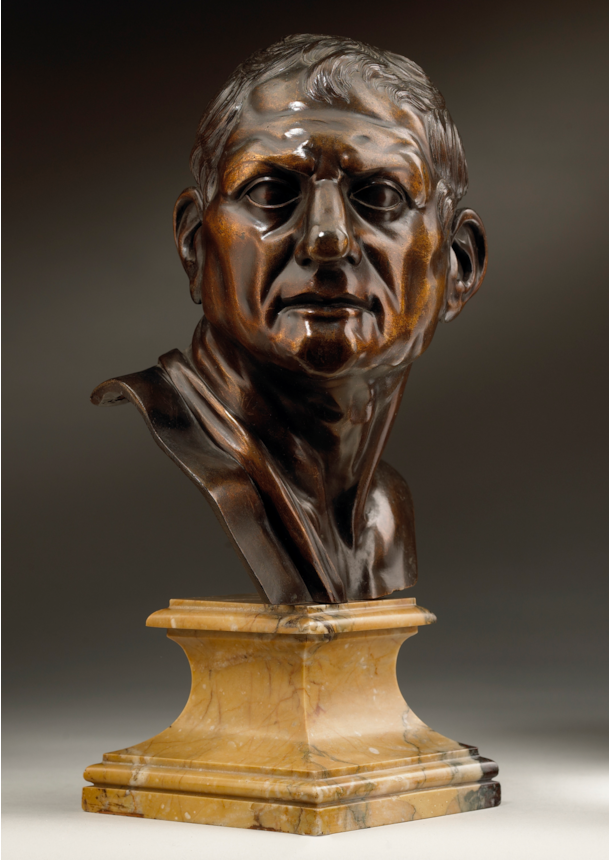
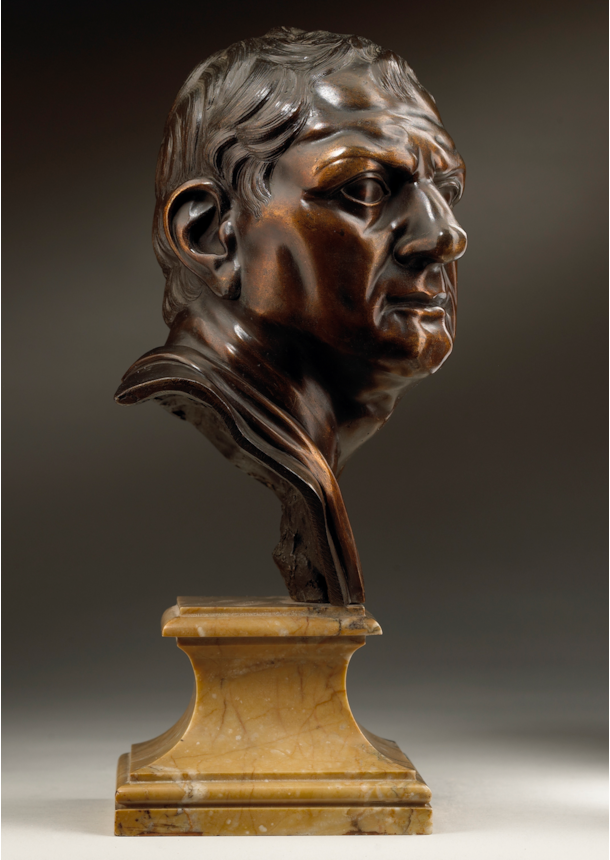
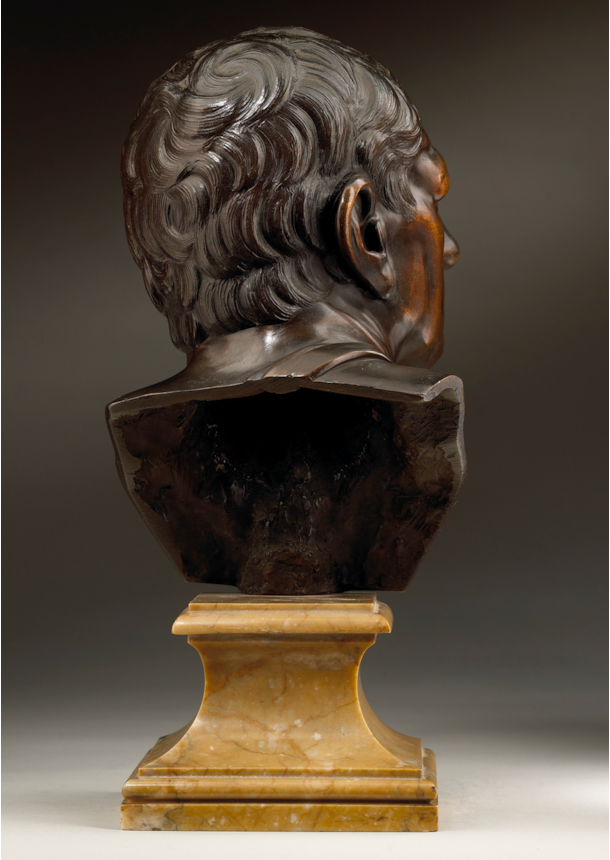
4. Busts of the Borghese Gladiator and Lysimachus
After the Antique
Bronze, on Giallo Antico marble socles
£17,500


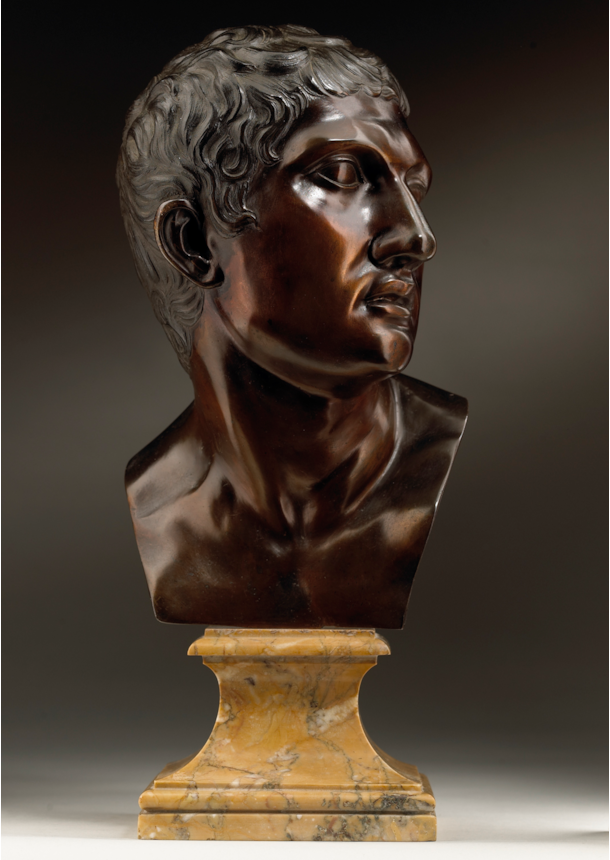
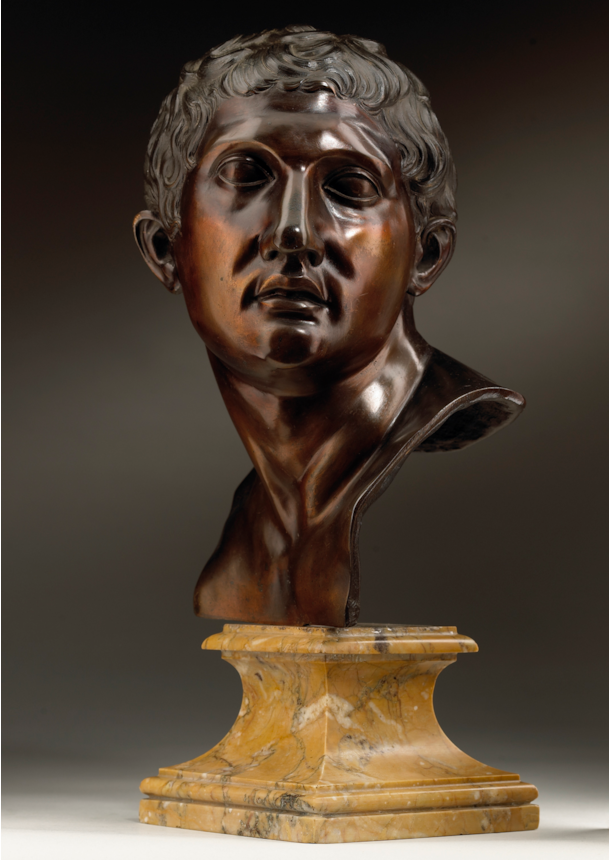
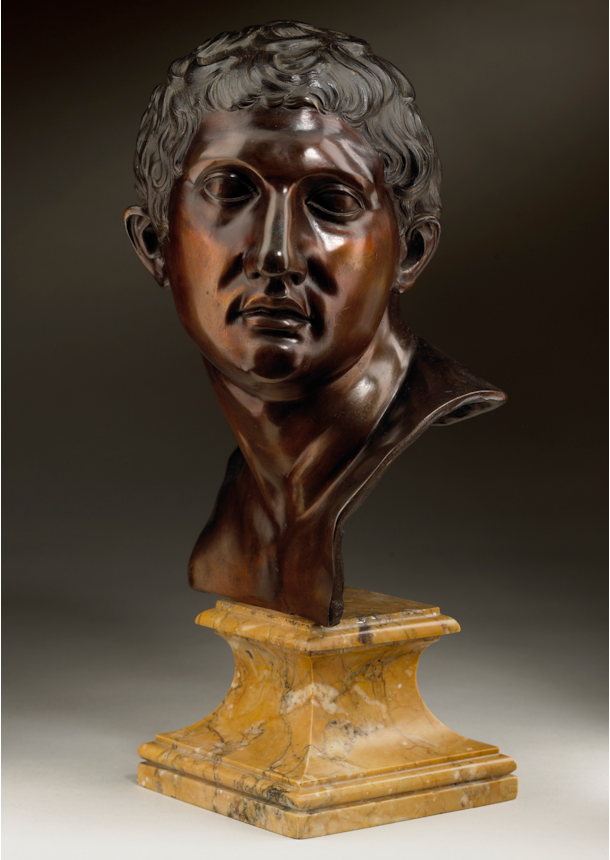
Borghese Gladiator Lysimachus
26 cm (10 in.) high, the bust 22 cm (8 in.) high, the bust
36 cm (14 in.) high, overall 32 cm (12 in.) high, overall
16 cm (6 in.) wide 15 cm (6 in.) wide
The present busts depict two bronze reductions after ancient marble statues. Sculptural reductions and adaptations such as the present bronze typify the fascination with the ancient world that preoccupied artists and their patrons throughout Europe during the late seventeenth and eighteenth centuries. Bronze replicas such as the present work were in high demand amongst Grand Tourists. Indeed, the interest in antiquity extended beyond antiquarian circles, into the cultured, educated elite, who amassed great collections of antiquities in their villas and houses, ones that acted as important markers of their social identity.
The first bust can be identified as a copy of an ancient Greek marble statue, known more famously as the Borghese Gladiator. Excavated shortly before 11th June 1611 in Anzio, on the west coast of Italy, the sculpture entered the collection of Cardinal Borghese at some point before 1613. Purchased by Napoleon in 1807, alongside most of the Borghese collection of antiquities, the Gladiator, as it was then known as, arrived in Paris the following year, where it remains to this day. The ancient model was admired greatly from the time of its discovery; in 1622, an English visitor was told that the Gladiator was one of the two chief sculptures in the Villa Borghese, and it remained one of the most admired works of antiquity during its two centuries in Rome.
The second bronze is based on a life-size ancient Roman marble bust in the Museo Archeologico Nazionale in Naples, which previously formed part of the Farnese collection of antiquities. Since the eighteenth century, the identity of the figure has been debated, and the bust was subject to various attributions, particularly as Aratus, Demosthenes, or a Roman General. The bust is now agreed to be a portrait of the Macedonian general, successor of Alexander the Great and eventual King of Thrace and Asia Minor, Lysimachus (c. 360-281 B.C.) Born in 360 B.C. in Pella, Macedonia, Lysimachus rose to prominence under the reign of Alexander, serving as his immediate bodyguard during his campaigns in Persia and India. Following Alexander’s sudden death in 323 B.C., Lysimachus was appointed as a governor of the Cheronese and of Thrace. After a life of fighting to consolidate, maintain, and expand his power, in 281 B.C., at nearly eighty years old, Lysimachus was finally killed in battle against his equally elderly rival and fellow successor of Alexander, Seleucus I.