






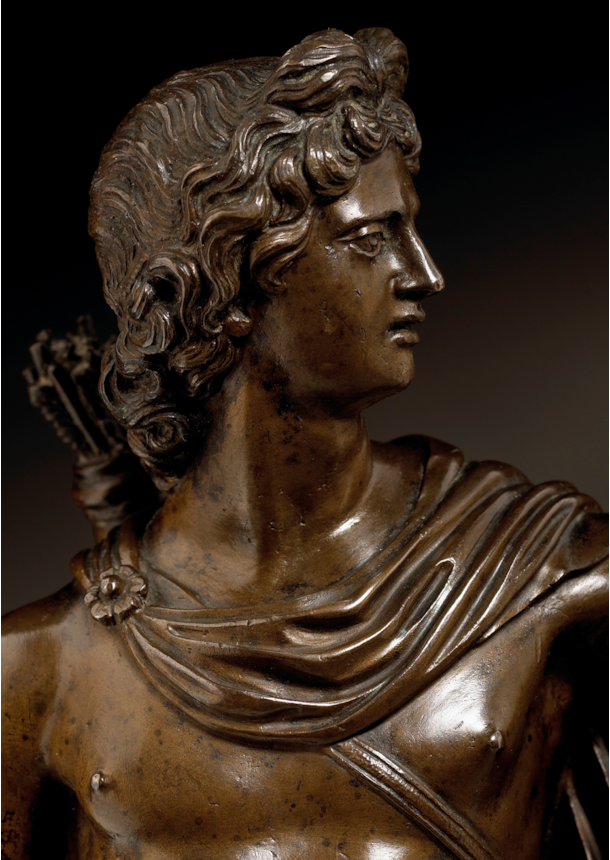



Giovanni Francesco Susini (1585-1653) (Attributed to)
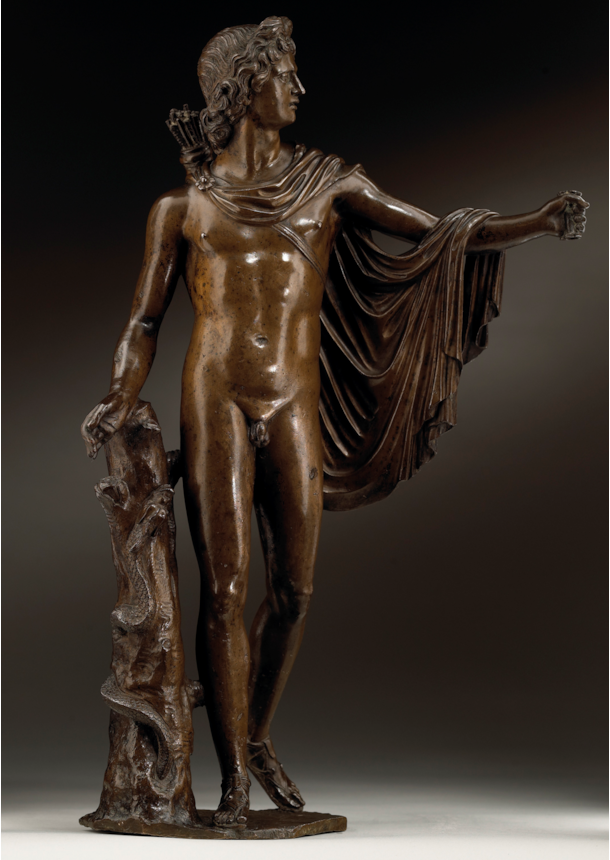
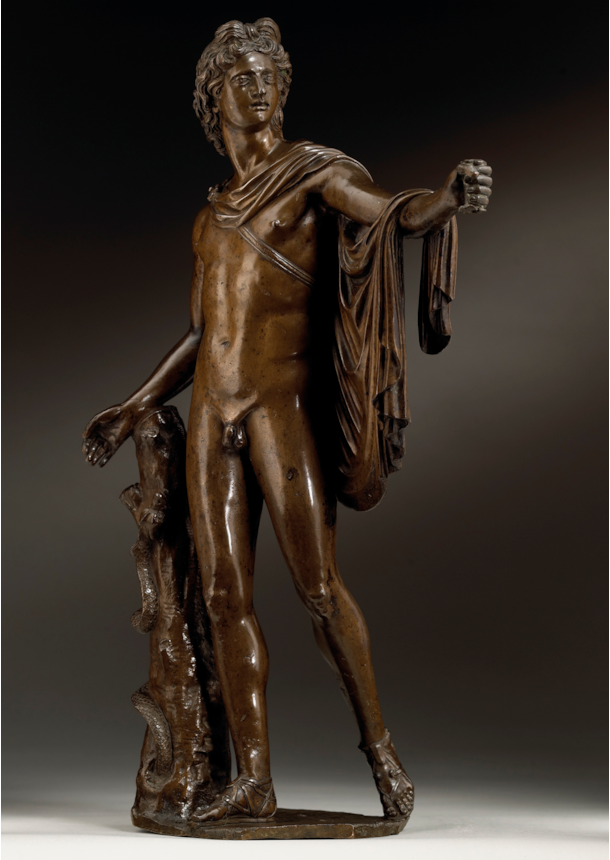
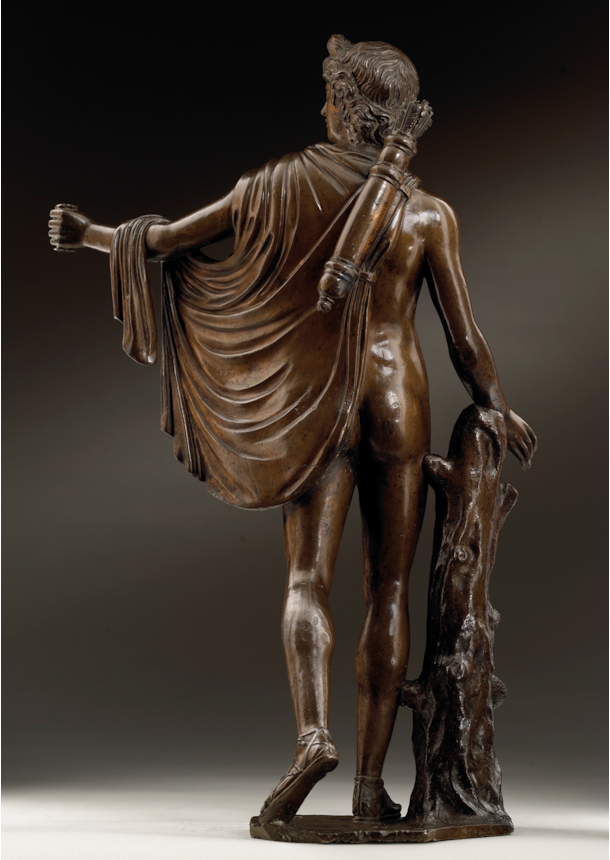
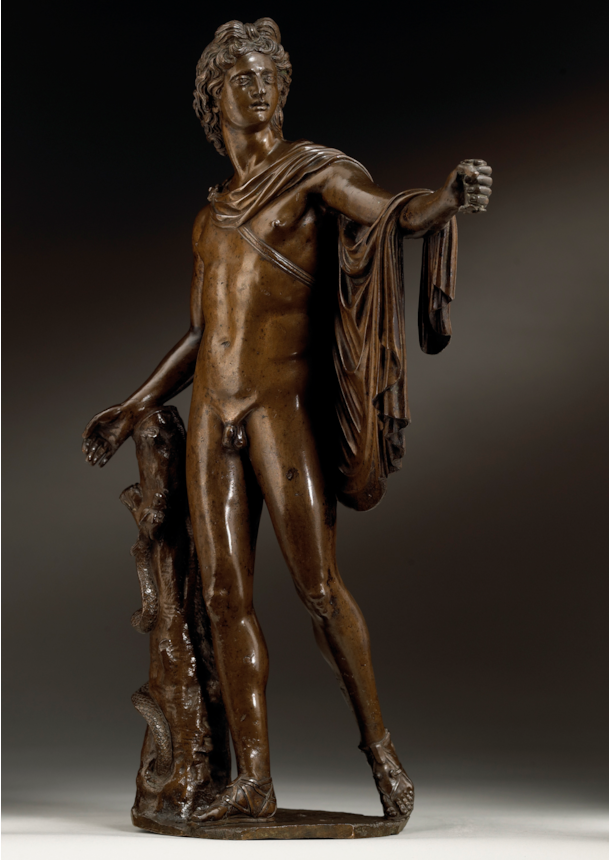
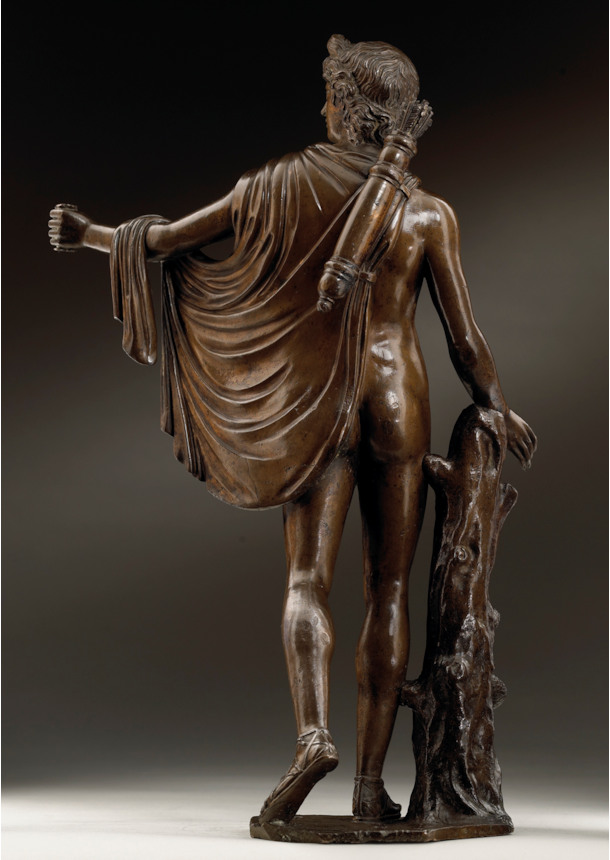
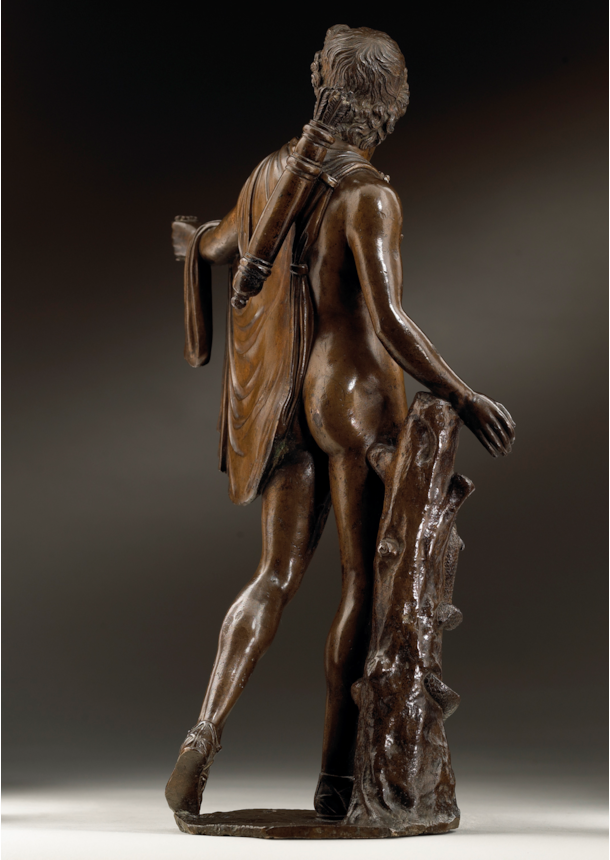
27. Apollo Belvedere
After the Antique
Bronze
41 cm (16 ¼ in.) high


Born in Florence in 1585, Giovanni Francesco, or Gianfrancesco, Susini was apprenticed to his uncle Antonio Susini (1558-1624), who had been the principal assistant and arguably most accomplished bronze caster of the Flemish master sculptor Giambologna (1529-1608). To further his training, Giovanni Francesco travelled to Rome circa 1624-1626, where he studied the newly discovered antique statues. Upon his return, he inherited his uncle’s workshop in Via dei Pilastri after the latter’s death in 1624, and alongside his own inventions, he continued to produce, just like Antonio had done, bronze statuettes after the Antique and highly finished casts of Giambologna’s models.
The present bronze is a freshly modelled reduction of the famous ancient marble in the Belvedere Courtyard of the Vatican, known as the Apollo Belvedere. Scholars have been divided on whether the work is a Greek original, or a Roman copy of a fourth-century Greek bronze carved during the Hadrianic period. The Apollo Belvedere represents one of the most celebrated statues surviving from ancient times and has received rapturous praise by connoisseurs since its placement in the Vatican courtyard around 1511. The year of its discovery is untraced, but the statue is sketched in a drawing in the Codex Excurialensis, which is dated to about 1492, and its presence is recorded in the Vatican in 1509. After centuries in Rome, the Apollo was moved to Paris in July 1798, as it was ceded by Pope Pius IV to the French under the Treaty of Tolentino (1797). To mark the occasion, the marble was triumphantly processed through the streets of Paris in a case adorned with garlands. However, it was returned to the Vatican as early as January 1816, and resides to this day in the Belvedere courtyard, part of the Museo Pio-Clementino.
Possibly the earliest recorded bronze after the Apollo Belvedere is the one now in the Galleria Franchetti at the Ca' d'Oro in Venice, by the celebrated Mantuan sculptor Pier Jacopo Alari Bonacolsi, known as Antico, and dated to about 1502. This work testifies to the renown enjoyed by the Belvedere statue closely after its discovery. The statue remained immensely popular throughout the following centuries, as Renaissance collectors and later wealthy Grand Tourists relished the opportunity to own bronze reductions of the most famous statues of antiquity. Highly prized for the greater freedom and compositional daring that it allowed sculptors, for its durability, and for its rich and evocative surface, bronze took centre stage during the revival of interest in classical antiquity. Small-scale bronze reductions such as the present example allowed collectors to engage with the antique in the private setting of their homes, where they displayed their most precious collectibles.
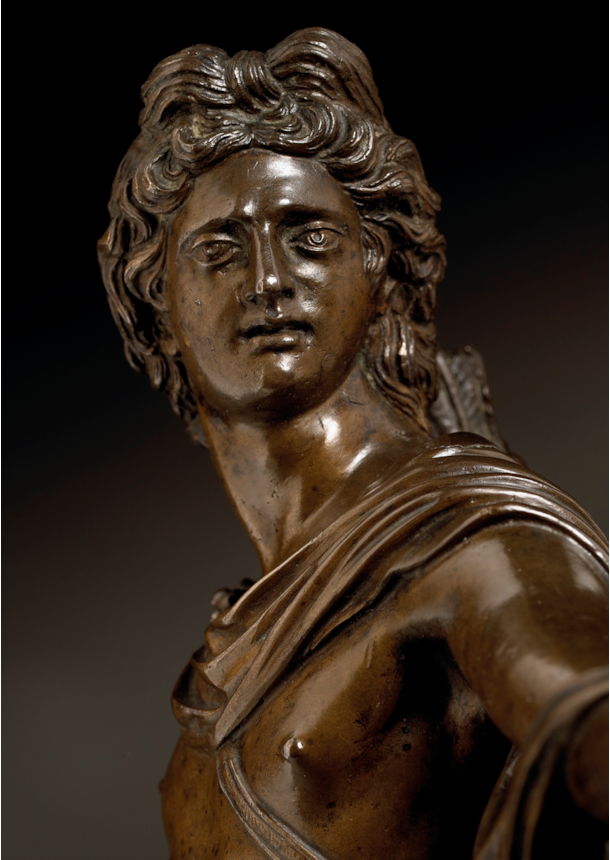
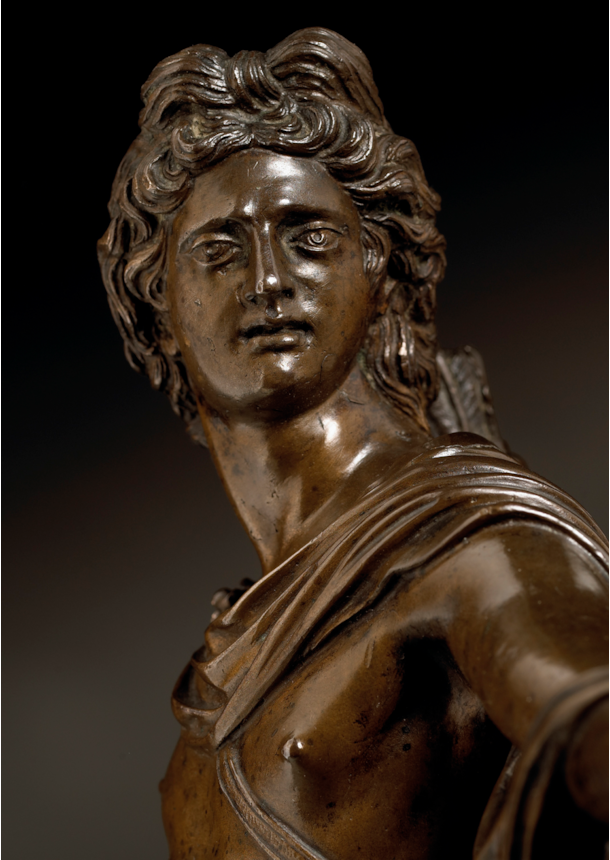
Typical of Giovanni Francesco are the high quality of the cast, the rich golden brown patina that transforms the bronze into a precious, jewel-like object, and the refined tooling used to describe different surface textures, such as Apollo’s smooth flesh and the scaly skin of the serpent that coils around the tree trunk. Further pointing to his hand are the naturalistic details of the composition such as the fingernails, the pupils of the eyes, the facial features and the fine detailing of the hair. Another example attributed to Giovanni Francesco is in the Musée d’Art Classique de Mougins (MACM), France.