



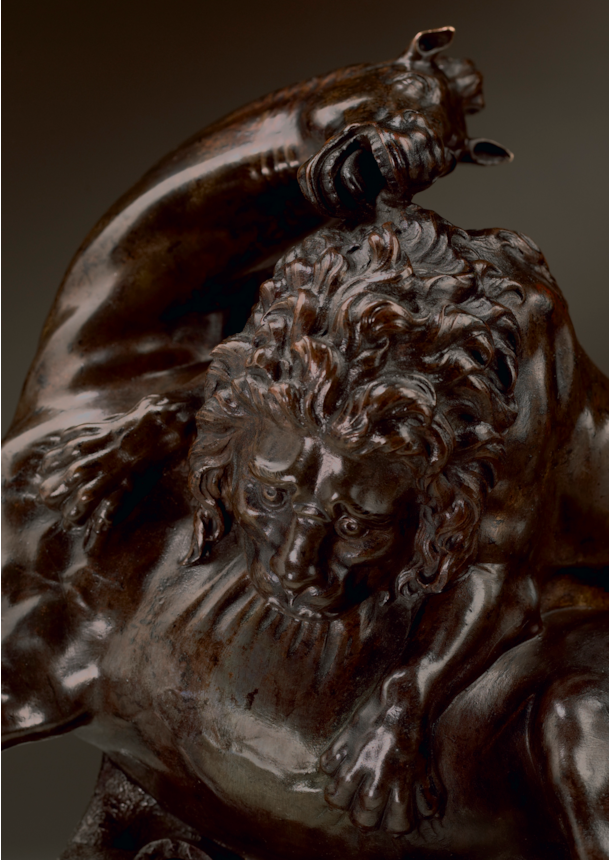


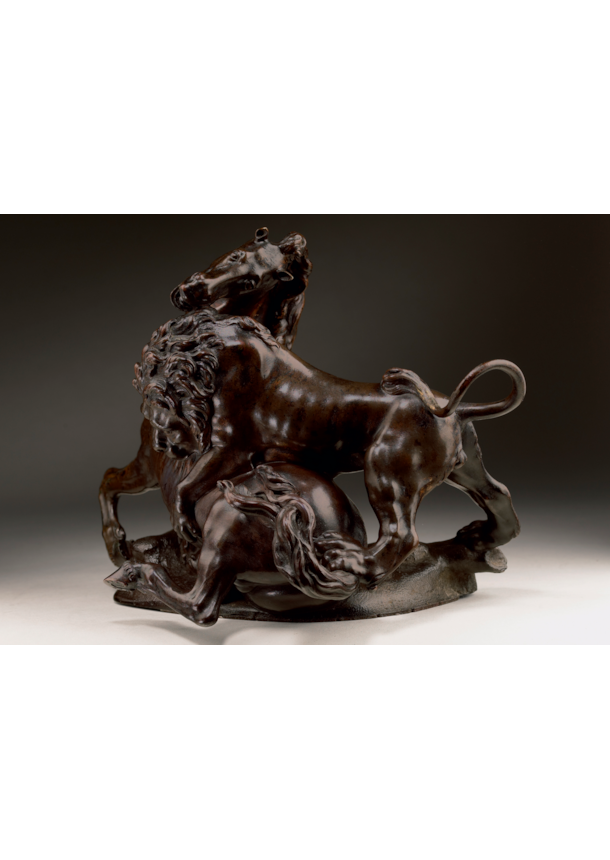
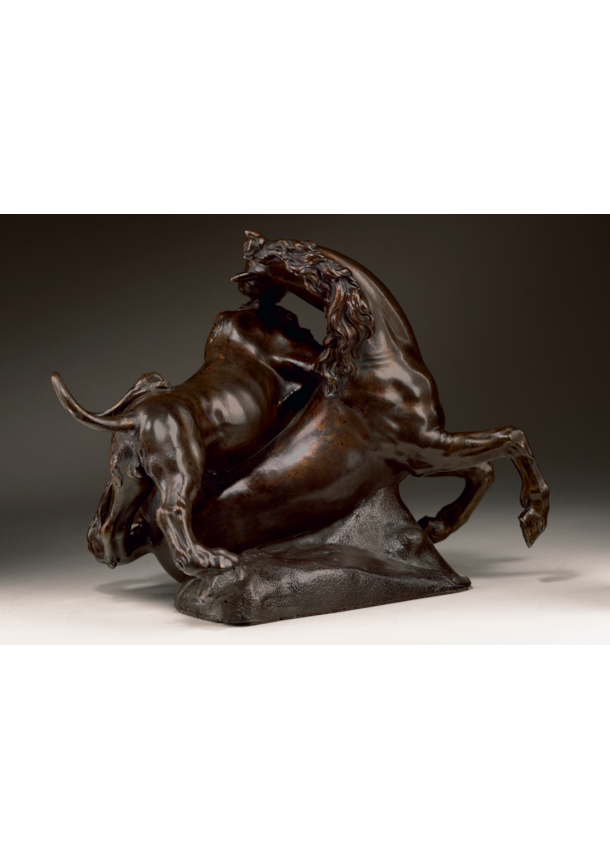
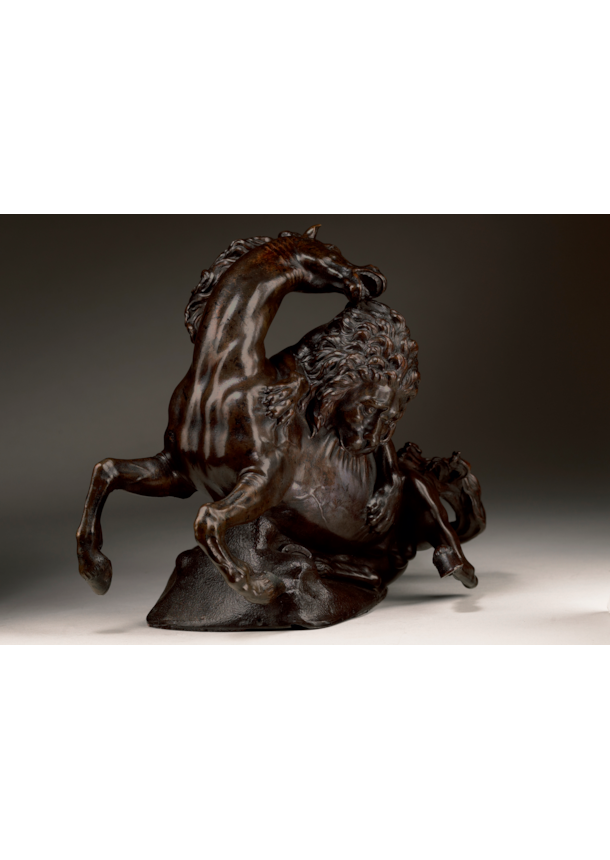
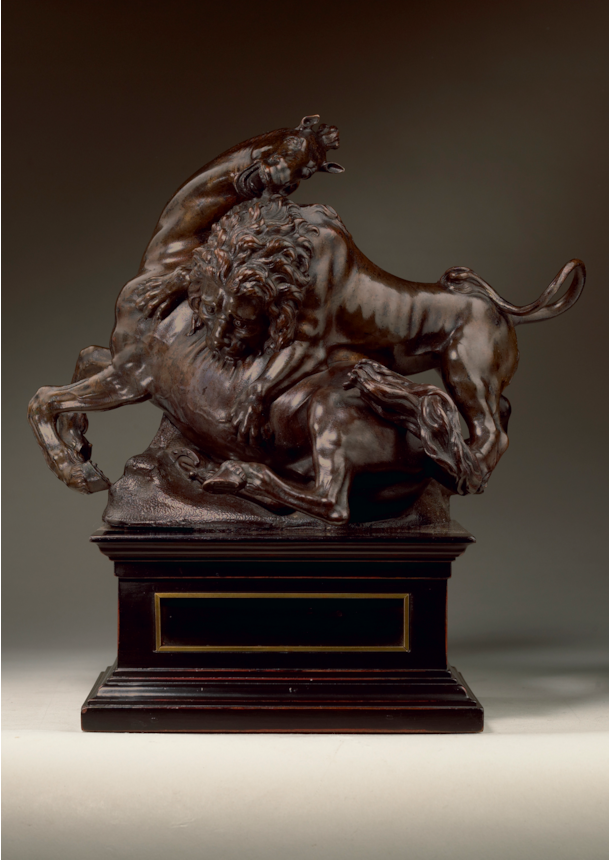



Giovanni Francesco Susini (1585-1653) (Attributed to)
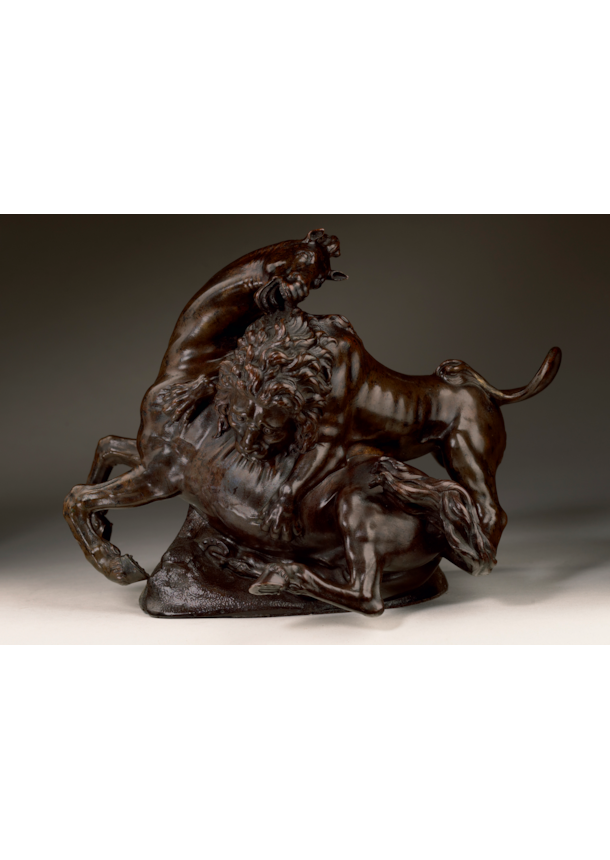
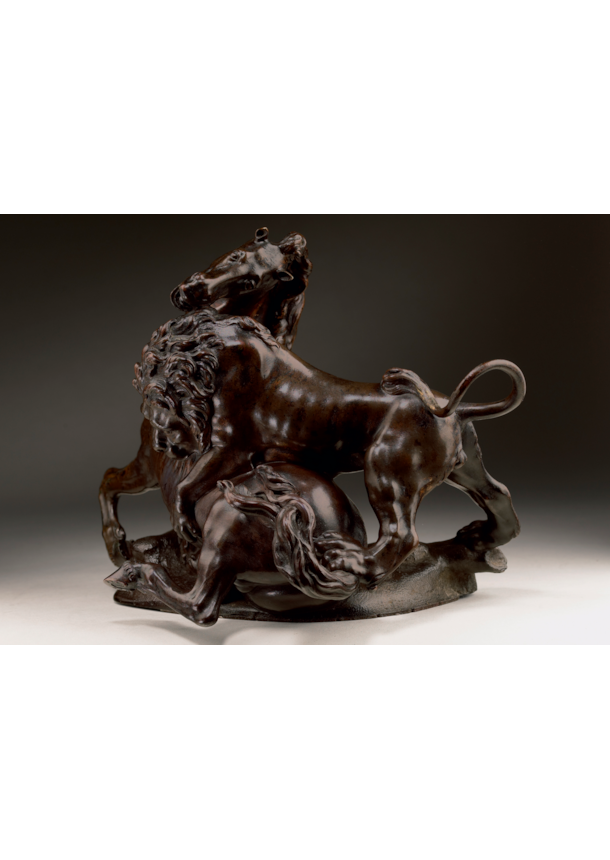
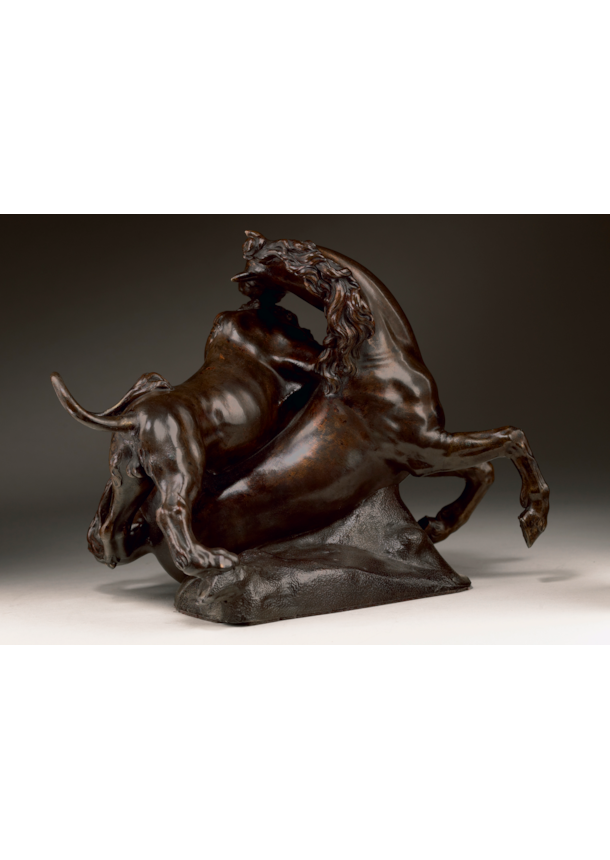
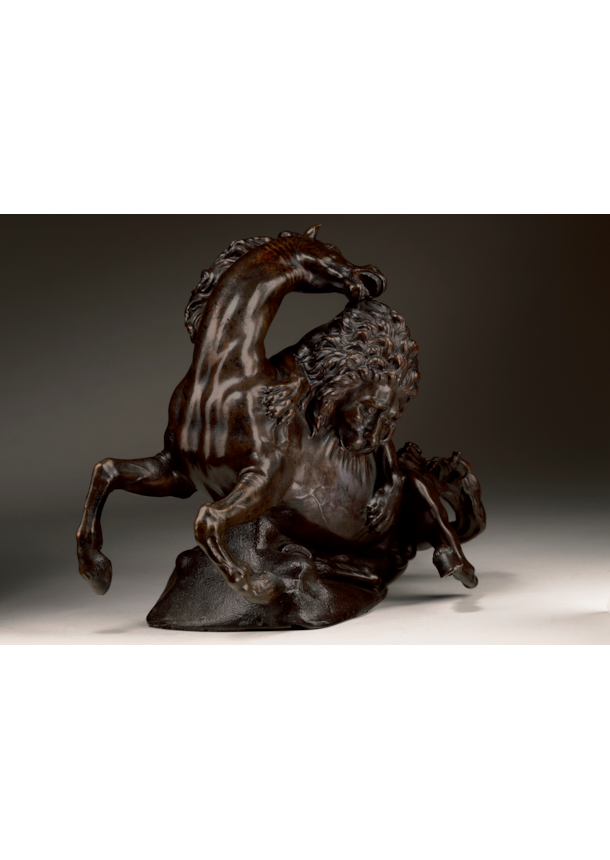
28. Lion Attacking a Horse
After a model by Giambologna (1529-1608)
Bronze
Florence, circa 1640
23 cm (9 in.) high


C. Avery, Giambologna: the Complete Sculpture, Oxford, 1987, pp. 60-61
C. Avery, Studies in Italian Sculpture, London, 2001, pp. 431-472
F. Haskell & N. Penny (A. Aymonino & E. Dodero), Taste and the Antique: The Lure of Classical Sculpture 1500-1900, revised and amplified edition, 2024, pp. 331-338
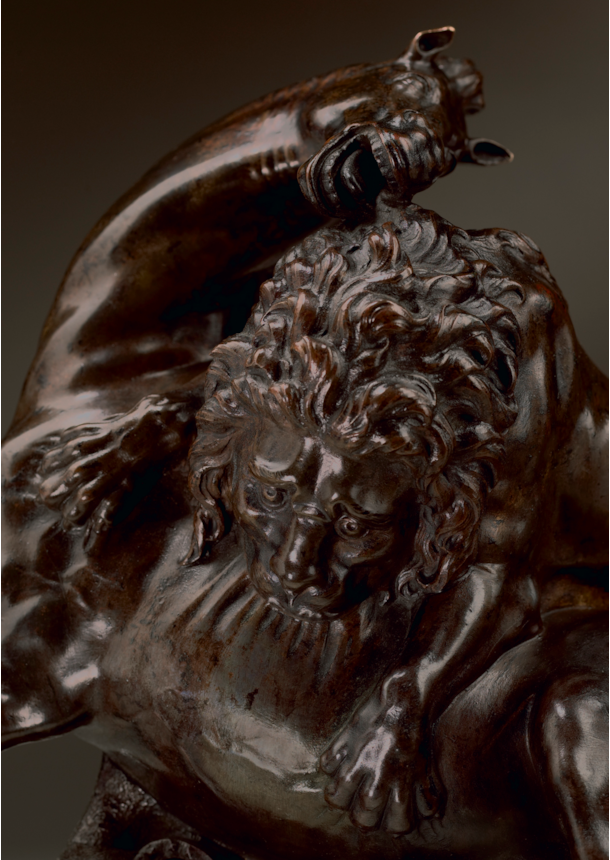
Finely cast, the present bronze depicts a Lion attacking a horse, a composition derived from the monumental ancient marble sculpture previously housed in the courtyard of the Palazzo dei Conservatori on the Campidoglio in Rome, and now in the exedra of Marcus Aurelius in the Capitoline Museums. This sculpture was among a select group of ancient marbles, such as the Belvedere Torso and the Cesi Juno, that Michelangelo’s contemporaries reported he greatly admired, describing it as meravigliosissimo, praising its artistic merits.
Giambologna encountered the ancient marble prior to its restoration, either during his stay in Rome between 1550 and 1552 or on a journey with Antonio Susini around 1588. As a result, his model of a lion attacking a horse represents an exemplary resolution to the marble's restoration. Frequently displayed alongside its counterpart, Lion Attacking a Bull, Giambologna's model gained considerable acclaim and was consistently cast in bronze by his principal assistant, Antonio Susini, as well as by Susini's nephew, Gianfrancesco. Notable examples of these bronzes, produced by the Susini workshop, are currently housed in the Getty Museum, Los Angeles (inv. 94.SB.11.1 and inv. 94.SB.11.2).
Giambologna's conception of the Lion and a Horse is undeniably linked to a restoration initiative for a renowned, yet fragmentary, classical marble depicting the same subject. As Charles Avery noted in his 1987 publication:
“Known throughout the Middle Ages, the Roman group had been moved to the Piazza del Campidoglio when Michelangelo redesigned the area and he is said to have regarded it as ‘meravigliosissimo’ and “praise it to the skies”. In 1594 it was removed to the Palazzo dei Conservatori, where it now adorns a fountain in the garden, and missing elements were restored by a Milanese, Ruggiero Bescapé.”
A drawing by Amico Aspertini in the Berlin Kupferstichkabinett provides a record of the sculpture’s fragmented state, with the lion’s hind legs and the horse’s head and limbs absent, prior to its restoration in 1594 by the Milanese sculptor Ruggero Bescapè.
Avery continues:
“An engraving by Cavalleriis published before 1584 also shows its poor prior condition and in that state the missing head of the horse could have been envisaged in various ways. An idea suggested in a Northern engraving of a Lion-hunt, possibly by Jan van Scorel, which might have been known to Giambologna, was that the horse should turn its head backwards as though to bite its attacker. This was the solution adopted by Giambologna and Susini in their standard version.”
The pair of bronzes do not appear in any contemporary inventories and are absent from the literature until Zeh’s list of authentic bronzes in 1611. This suggests that they were created during Giambologna’s later years, a period when Antonio Susini was casting his models. However, they likely predate Bescapé’s 1594 restoration of the original group. These two closely integrated compositions exemplify Giambologna’s enduring engagement with classical sculpture while also reflecting his growing interest in animal subjects, which emerged after he had achieved mastery in the representation of the human form.
After taking over his uncle Antonio’s Florentine workshop at Via dei Pilastri in 1624, Giovanni Francesco, or Gianfrancesco, Susini continued the successful tradition of producing casts based on Giambologna’s models, as exemplified by the present bronze. Gianfrancesco’s distinct stylistic modelling is evident throughout the work. Notably, the delicate and refined chasing of the lion’s mane is characteristic of his technique, contrasting with Giambologna’s typically looser approach and Antonio’s more meticulous, highly finished surfaces. Similarly, the smooth, polished texture of the lion’s body is a defining feature of Gianfrancesco’s work, showcasing his exceptional skill in bronze casting and finishing.