








Laurent Delvaux (1696-1778)
11. Resting Hercules
Marble
94 x 47 cm (37 x 18 ½ in.)


M. Devigne, De la parenté d’inspiration des artistes flamands du XVIIe et du xviiie siècle: Laurent Delvaux et ses élèves, Bruxelles-Paris, G. Van Oest, 1928
T. Hodgkinson, The James A. de Rothschild Collection at Waddesdon Manor: Sculpture, Londres Fribourg, 1970
A. Jacobs, Laurent Delvaux 1696-1778, Paris, Athena, 1999
A. Jacobs, “Pierre-Denis Plumier (Anvers 1688- Londres 1721) ”, Revue belge d’Archéologie et d’Histoire de l’Art, LXVIII, 1999, “pp”.. 113-170
A. Jacobs, «Plumier, Pierre-Denis», Nouvelle Biographie Nationale, 7, 2003, “pp”.. 291-293.
I. Roscoe, Peter Scheemakers and classical sculpture in early Georgian England, PhD dissertation, Leeds, September 1990 (unpublished)
I. Roscoe, « Peter Scheemakers », The Walpole Society, 1999
M. Whinney, Sculpture in Britain 1530-1830, 2 éd., Harmondsworth, 1988
G. Willame, Laurent Delvaux 1696-1778, Bruxelles-Paris, 1914
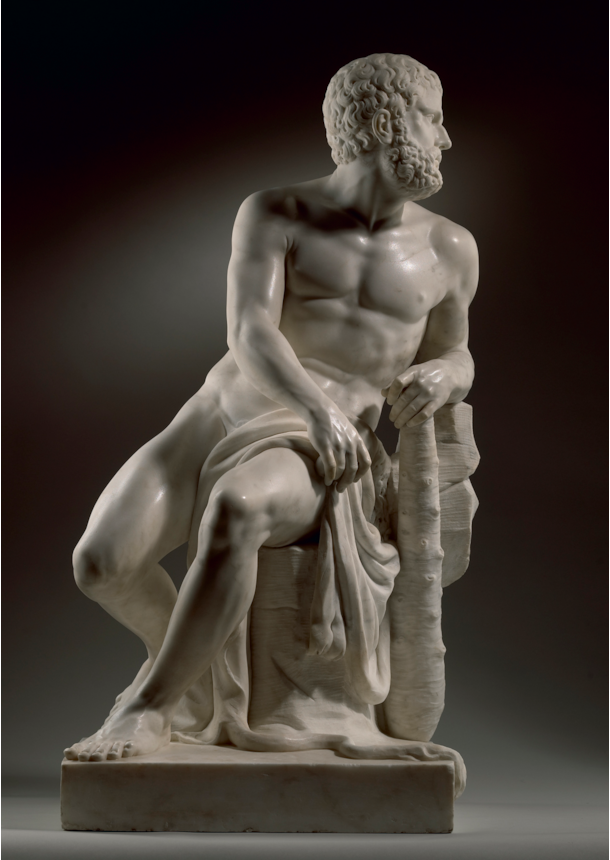
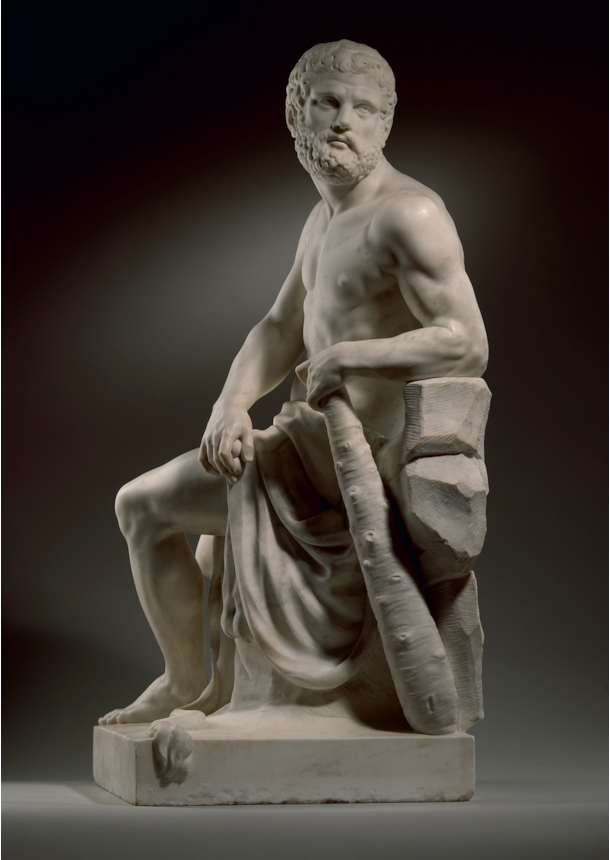
During his period of study in Rome from 1728 to 1732, the Flemish sculptor Laurent Delvaux had the opportunity to admire the Farnese Hercules an emblematic masterpiece of ancient sculpture. He produced an exceptionally high-quality terracotta copy of it. After returning to the Low Countries, he developed several versions inspired by this statue. Around 1755, he proposed an original version of Hercules depicted seated, and in 1768 he received the prestigious commission for the monumental marble statue of Hercules intended for the grand staircase of the Brussels palace of Charles- Alexander of Lorraine, Governor-General of the Austrian Netherlands. Completed in June 1770, this work deliberately departs from the image of the burdened, weary hero of the ancient statue. Delvaux replaces it with a heroic and solemn figure, symbolically embodying the physical and moral virtues of his august patron.
However, Delvaux’s interest in the Farnese Hercules predates his Roman journey. Having settled in London as early as 1721, he had already adopted this model, as evidenced by the monumental marble Hercules executed for Lord Castlemaine (h. 201.9 cm; Aylesbury, Waddesdon Manor), as well as by this newly discovered version of Resting Hercules.
The end of the War of the Spanish Succession in 1714 enabled the English elite to resume the Grand Tour to Rome, helping to revive and strengthen interest in Antiquity. An increasing number of members of high society consequently sought to adorn their houses and gardens with ancient works or sculptures inspired by the antique. Within this context, Delvaux (together with Pieter Scheemakers (1691–1781), another expatriate from the Low Countries) ran one of the most prosperous sculpture workshops of the period at Millbank, successfully meeting the expectations of this brilliant English society. Several mythological works now identified bear witness to this activity, but even more revealing is the considerable number of statues and statuettes of gods, goddesses, and ancient figures listed in the catalogue of the sale of their shared workshop, held on 16 April 1728 to finance their journey to Italy. This catalogue lists, under Delvaux’s name, a Diana, a Leda, a Bacchus, several Venuses, a Jupiter, a Satyr, an Apollo, etc., as well as various figures described as “after the Antique.” Added to these are a Hercules and Omphale and no fewer than five other statues of Hercules. Some works are specified as being in plaster, others described as “sketches” or “models”; in most cases, however, neither the material nor the dimensions are indicated. It is therefore possible that the present marble statue of Resting Hercules corresponds to one of these listed works, or that it was executed after one of the models mentioned in the catalogue. It would thus represent a fine production dating from Laurent Delvaux’s London career. It should also be noted that the same catalogue includes a Hercules by Plumier and another Hercules by Scheemakers.
Born in Ghent, Laurent Delvaux first entered the workshop of the local sculptor Gery Helderenberg (1651–1739), before joining, between 1713 and 1714 in Brussels, the studio of Pierre-Denis Plumier (1688–1721), then at the height of a brilliant career. Plumier soon accepted the invitation of William, 1st Earl of Cadogan, who, during a diplomatic mission to the Low Countries, proposed that he settle in London. Plumier undertook this journey in 1721, accompanied by his wife, his children, and his pupil Laurent Delvaux. However, only a few months after his arrival, Plumier died prematurely, leaving numerous projects unfinished. Following his death, Delvaux and Scheemakers, his closest collaborators, took over the workshop, completed the commissions in progress, and endeavoured to preserve their master’s artistic legacy. Delvaux also married Plumier’s widow.
The attribution of our Resting Hercules to Laurent Delvaux can be more specifically, in our own view, tied down to the early phase of his London career, when the influence of his master Plumier was still strongly felt and our argument rests on a set of converging clues. First, it should be recalled that Plumier had made a specialty of representing the allegorical figure of Time, depicted as a nude old man of vigorous athleticism, engaged in complex poses. The style of these marble statues, all large scale, is readily recognizable: it combines powerful plasticity with an enveloping softness, with subtly blended transitions in the treatment of details. Delvaux is thus thought to have executed the statue of Time for the Funerary monument of the Duke of Buckingham in Westminster Abbey (1721–1722), a work that Plumier would only have had time to sketch before his premature death. This figure adopts precisely the kind of complex pose characteristic of Plumier’s formal vocabulary. Delvaux therefore began his career deeply imbued with his master’s art, and several sculptures produced in London bear witness to this stylistic lineage, notably through the use of learned bodily contortions, as attested by the Pomona in the stone group of Vertumnus and Pomona preserved at the Victoria and Albert Museum (inv. A.1-1949).
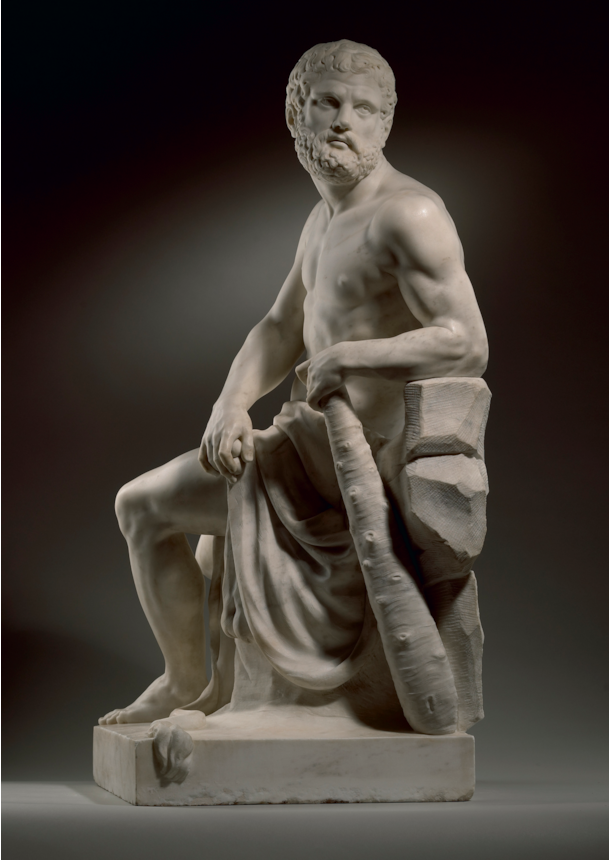
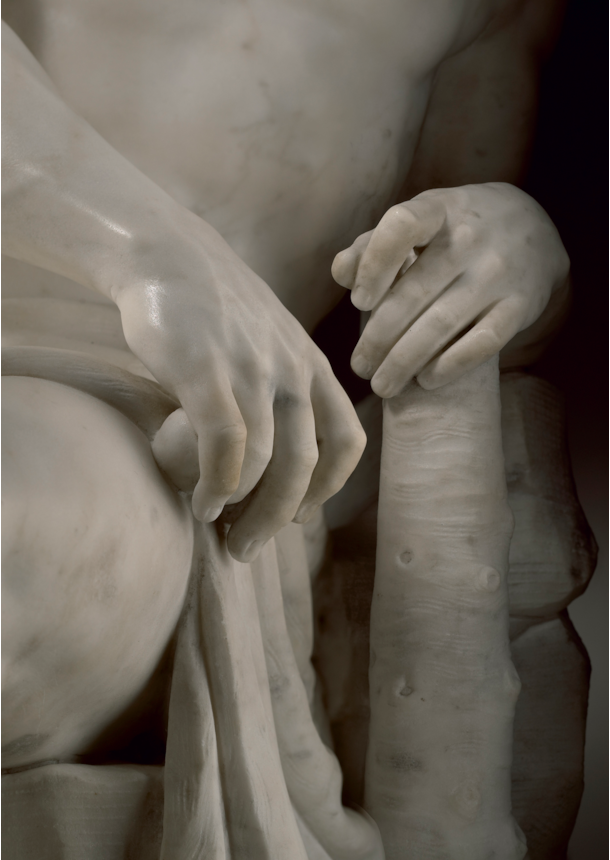
The present statue of Resting Hercules derives from a careful study of the Farnese Hercules, of which it constitutes a subtle paraphrase in a seated position, combined with a reference to the Belvedere Torso. Delvaux, like his master, was familiar with these celebrated antique statues, whose images circulated widely throughout Europe through engravings, particularly those published in Domenico de Rossi’s Raccolta di statue antiche e moderne (Rome, 1704), as well as through reduced copies in bronze or marble, much sought after by wealthy collectors. It is also possible that Delvaux was acquainted with the somewhat massive, monumental stone version of the Farnese Hercules executed a few years earlier by John van Nost the Elder († 1729), a sculptor of Flemish origin likewise active in England, now preserved at Quarry Park, Shrewsbury, and it is also interesting to note the existence of another at Chirk Castle, Wrexham.
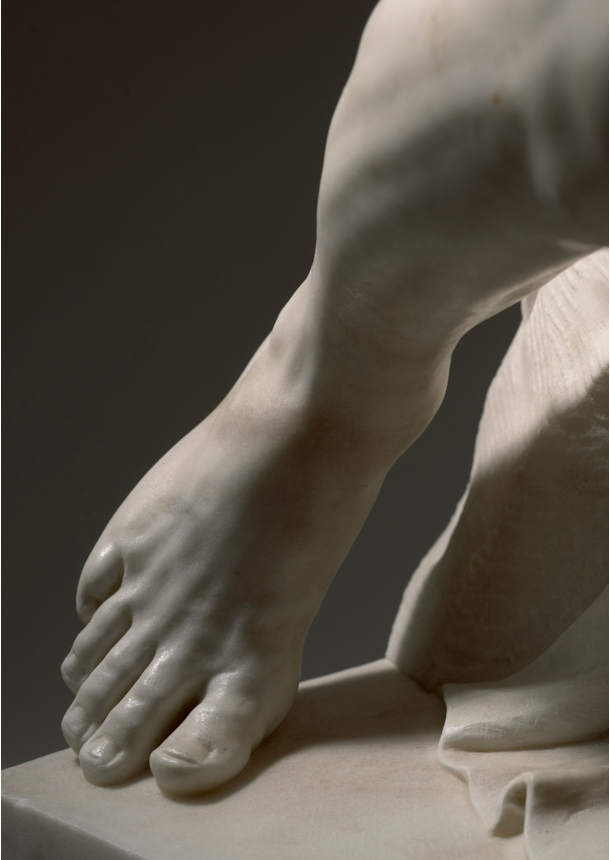
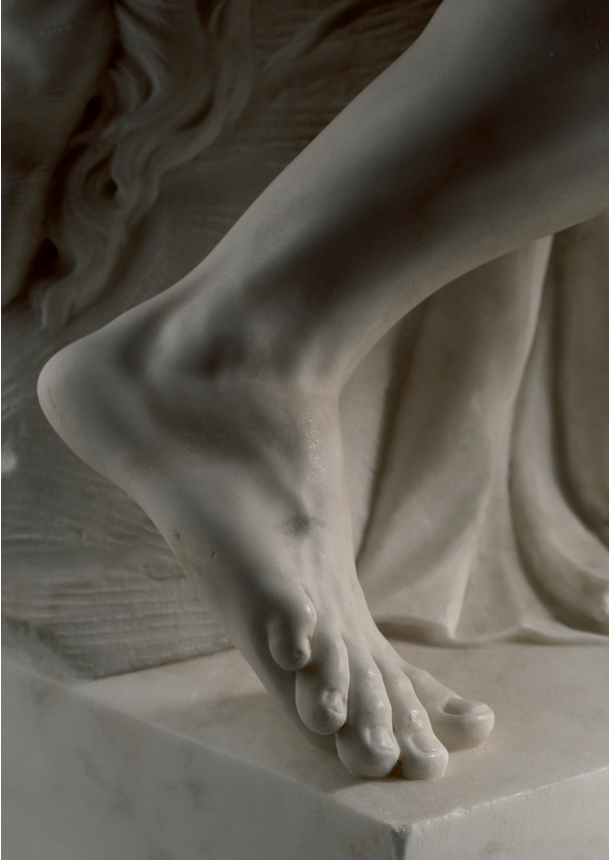
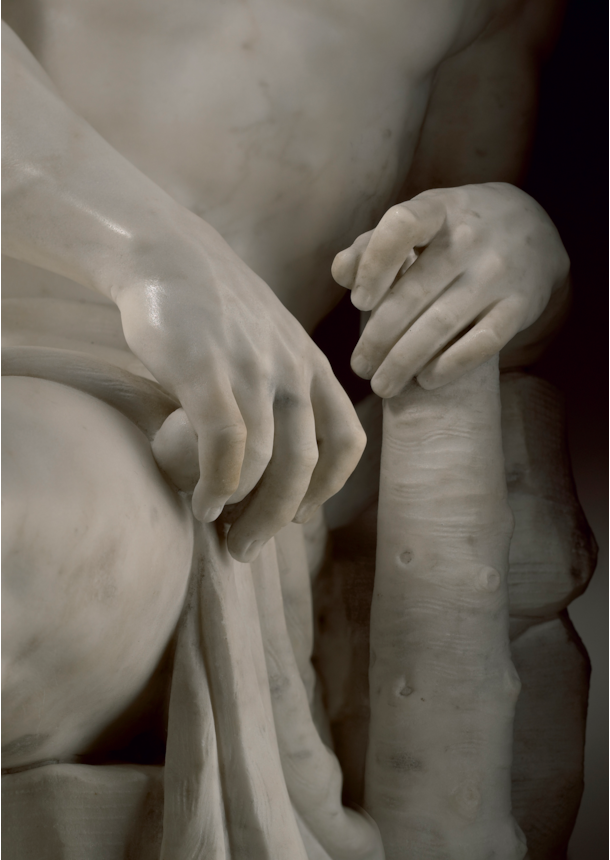
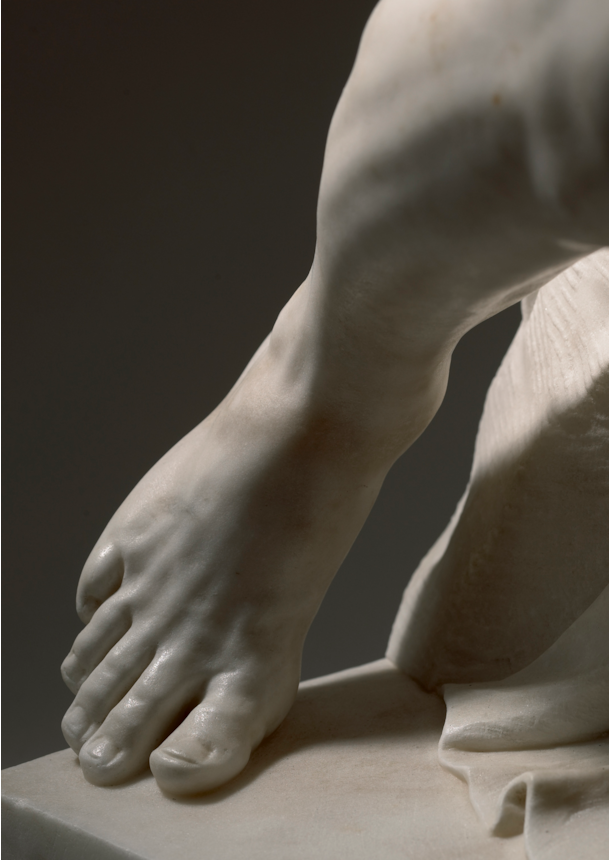
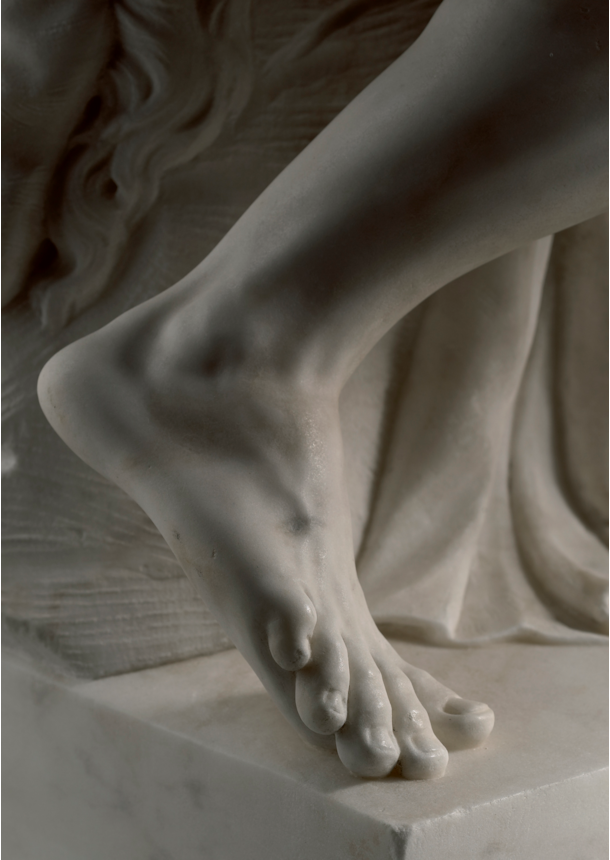
More than any other work by Delvaux, Resting Hercules reveals a close kinship with Plumier’s great marble statues. It shares the same conception of the athletic male body, characterized by an elaborate pose and by muscular masses articulated with great skill, in accordance with tastes and principles directly inherited from Plumier, as well as with the latter’s distinctive manner of enveloping the hero’s powerful musculature in a softness and refinement of almost sensuous quality. This somewhat “porcelain-like” aspect is also found in other London works by Delvaux, such as the Four Seasons at West Wycombe, dating from around 1722–1728. The drapery, treated in broad, supple folds that fall naturally, likewise reflects Plumier’s influence, for whom this device constitutes a constant formal feature.
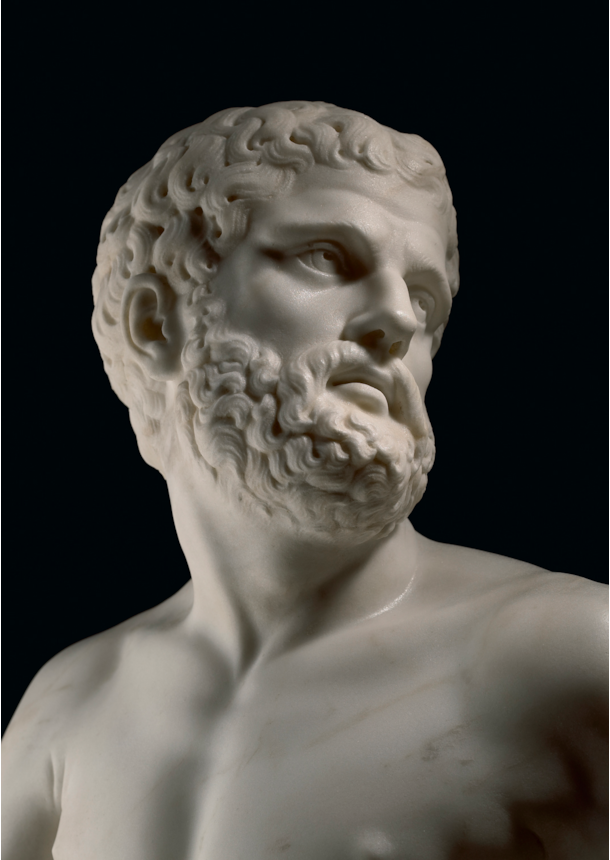
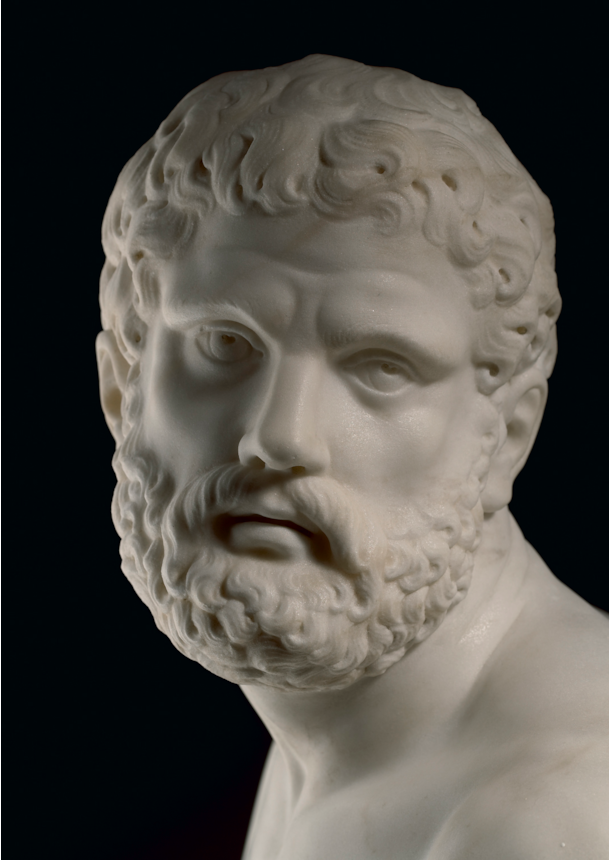
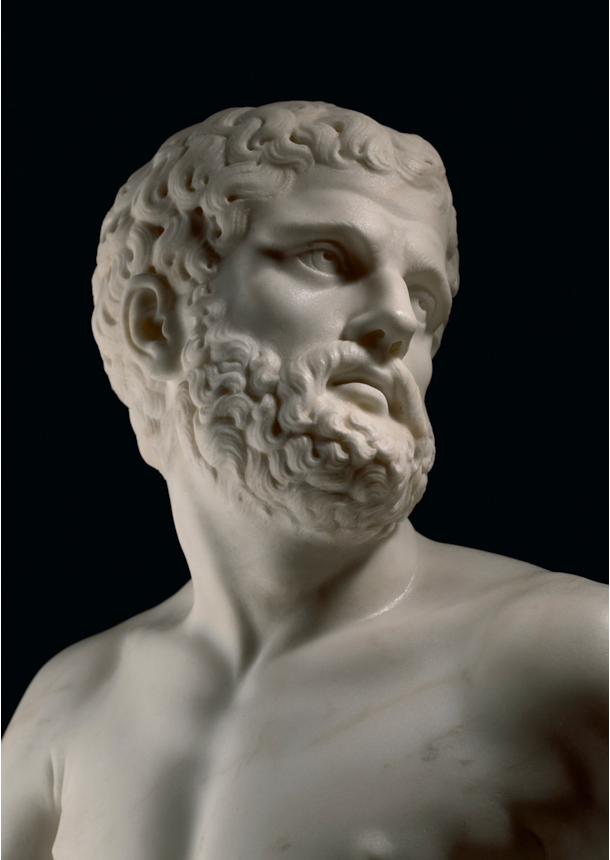
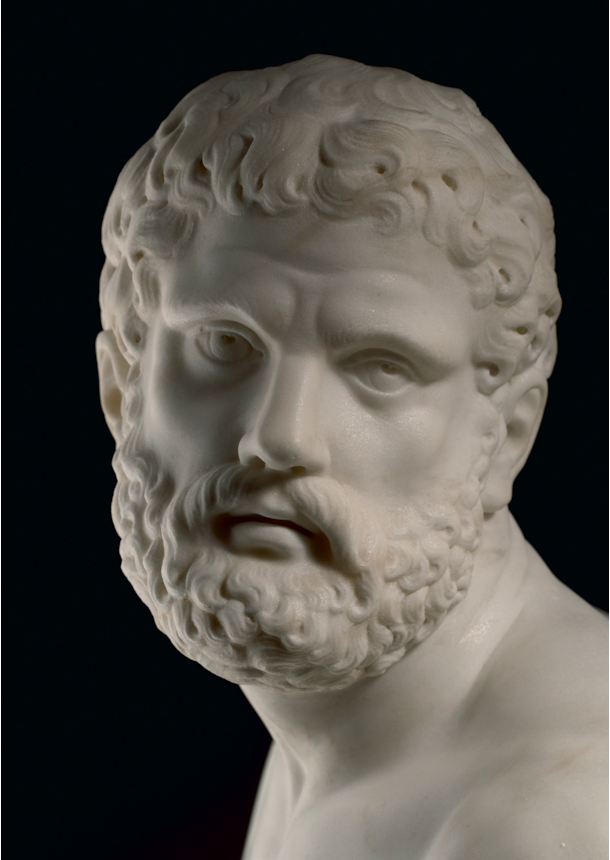
The face of our Resting Hercules, however, departs from Plumier’s almost silky facial models through a more pronounced emphasis on expression, particularly evident in the treatment of the gaze: the broadly delineated iris and the deeply carved pupil lend the eyes a depth that is at once penetrating and detached. This slightly vacant gaze would become one of Delvaux’s recurrent stylistic hallmarks throughout his career. The curly hair and, incidentally the beard, also suggest a striking affinity with that of the statue of King George I executed by Delvaux in 1724 (London, Public Record Office), as well as with certain of his copies of antique busts, notably that of Lucius Verus produced later in Rome for John, 4th Duke of Bedford (1728–1732; Woburn Abbey).
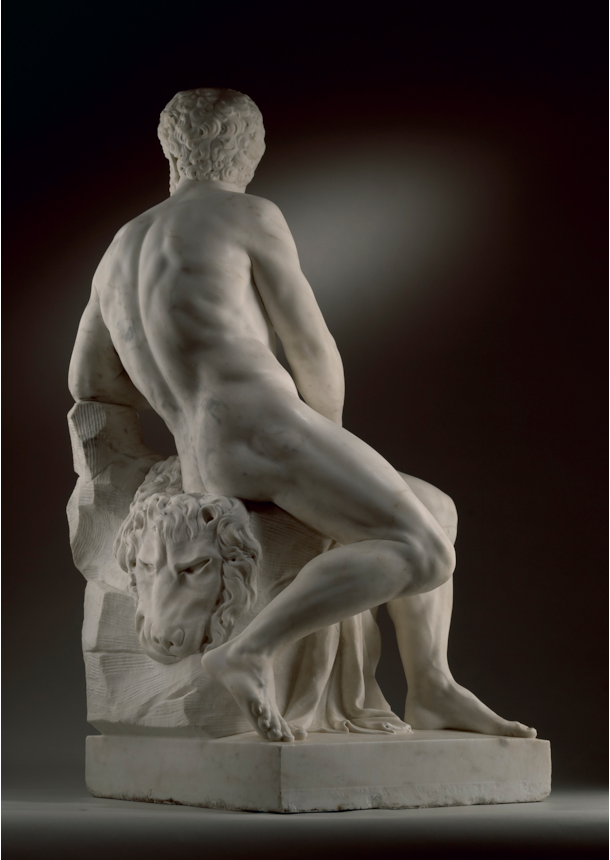
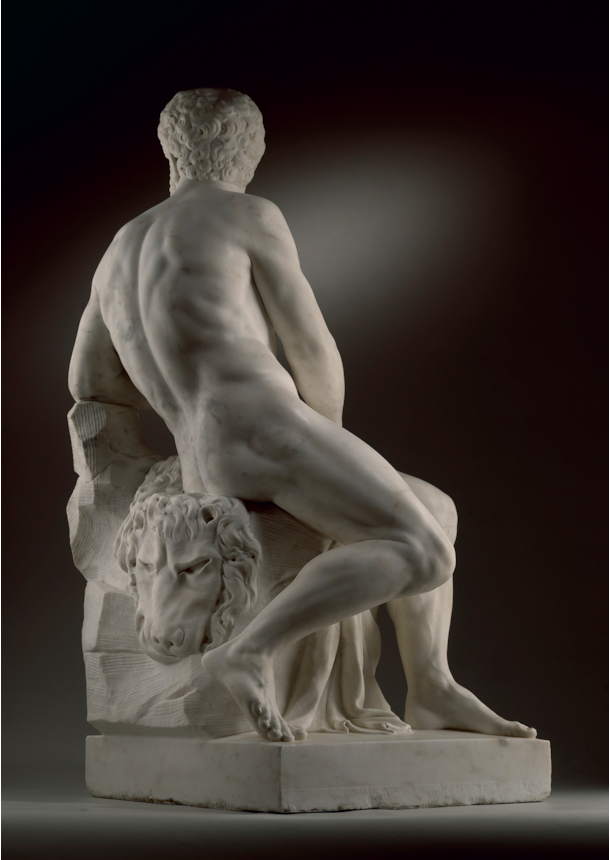
The fact that Delvaux returned to the motif of a Resting Hercules some thirty years later provides further evidence in support of the attribution of the work. While the general pose of this second version, particularly the position of the legs, remains almost identical, the reference to the Farnese Hercules is more explicit, notably in the positioning of the arms: the left arm hanging alongside the club set vertically, and the right arm holding the apples from the Garden of the Hesperides. The dynamic tension is more pronounced, a feature that may be linked to an artistic culture in the Low Countries deeply imbued with the Baroque style.
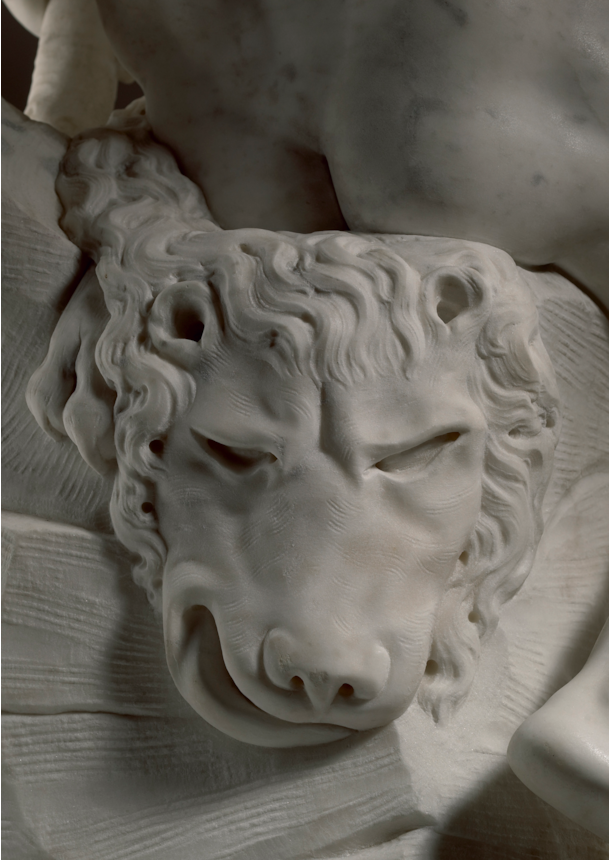
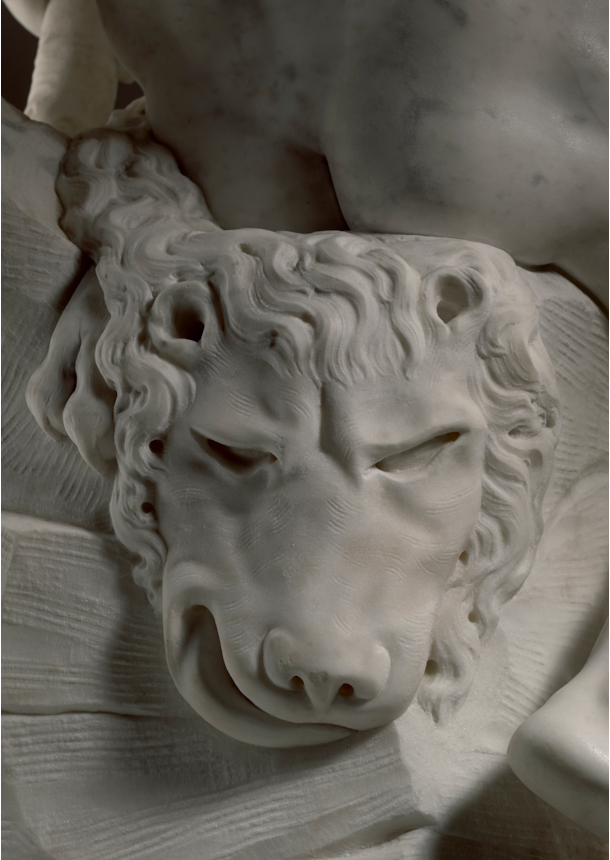
This evolution is also marked by a heightened attention to detail. It is particularly evident in the treatment of the lion’s hide and the rock overgrown with vegetation, in line with the Flemish realist tradition that Delvaux fully embraced after his permanent return to the Netherlands. The reference to the “London” version of the subject is unmistakable: Delvaux reproduces almost verbatim the hide of the Nemean lion’s head. Yet, having reached full creative maturity, the artist distinguishes himself here through a softening of the lines and an enhanced ability to convey the textures of objects—most strikingly in the morbidly supple rendering of the lion’s muzzle. Another version of Hercules is also known, signed and represented standing, which—both in its style and in the suave rendering of the marble, as well as in the pared-down simplicity of its base—could likewise have been sculpted in England.
Th present Resting Hercules appears to be a youthful work by Laurent Delvaux, belonging to a phase of experimentation and appropriation of both Plumier’s formal language and ancient statuary. It constitutes a true exercise in style, a fundamental element in the acquisition of the knowledge and technical skills required to run a workshop. One may envisage that it was a commission, perhaps even the sculptor’s first obtained in London, and, like the Hercules at Waddesdon Manor, the statue is neither signed nor dated. An important observation to note for the sculpted Hercules’ which are known to have been carved in England, one formerly in the Yves Saint Laurent and Pierre Bergé collection, and the one which now resides at Waddesdon Manor, along with our Resting Hercules, is that they all have simplified square bases, lacking any form of naturalia, another strong indication that the present Resting Hercules was carved early in Delvaux’s career. As referenced above, none of the three Hercules sculptures are either signed or dated. Finally, this work already reveals, in embryonic form, the essential traits of the style that Delvaux would go on to develop and refine throughout his career.
Alain Jacobs, 2026